
Table of Contents
- Why Material Quality Decides Your Project’s Success
- Understanding Crafting Quality Tiers and What They Mean
- How to Evaluate Craft Material Durability Before You Buy
- Where to Buy Professional Craft Supplies Without the Guesswork
- A Practical Checklist for Verifying Material Quality
- Choosing the Best Kids Craft Kits for Creativity and Safety
- Common Sourcing Mistakes That Waste Time and Money
- Final Thoughts on Finding Materials That Perform
- Frequently Asked Questions
Last Updated: September 7, 2026
Finding quality crafting materials often feels like a gamble. You order supplies online, wait for delivery, and discover the cord frays, the clay cracks, or the filament jams your printer. This guide breaks down how to find quality crafting materials every time, whether you are buying for a kids’ project, a jewelry hobby, or professional pottery work. We will cover how to evaluate durability, where to shop, and the specific red flags that signal wasted money.
The biggest mistake crafters make is assuming price equals quality. In practice, the difference between a frustrating project and a successful one comes down to a few verifiable details about the material itself. Below, we’ll show you how to check those details before you buy, so you can stop wasting time and money on supplies that let you down.
Why Material Quality Decides Your Project’s Success
Quality crafting materials are the foundation of any project’s outcome. A bead that snaps during stringing, a filament that warps mid-print, or a clay that crumbles in the kiln doesn’t just ruin the item; it erases the hours you invested. Quality crafting materials determine whether your finished piece holds its shape, color, and durability over time.
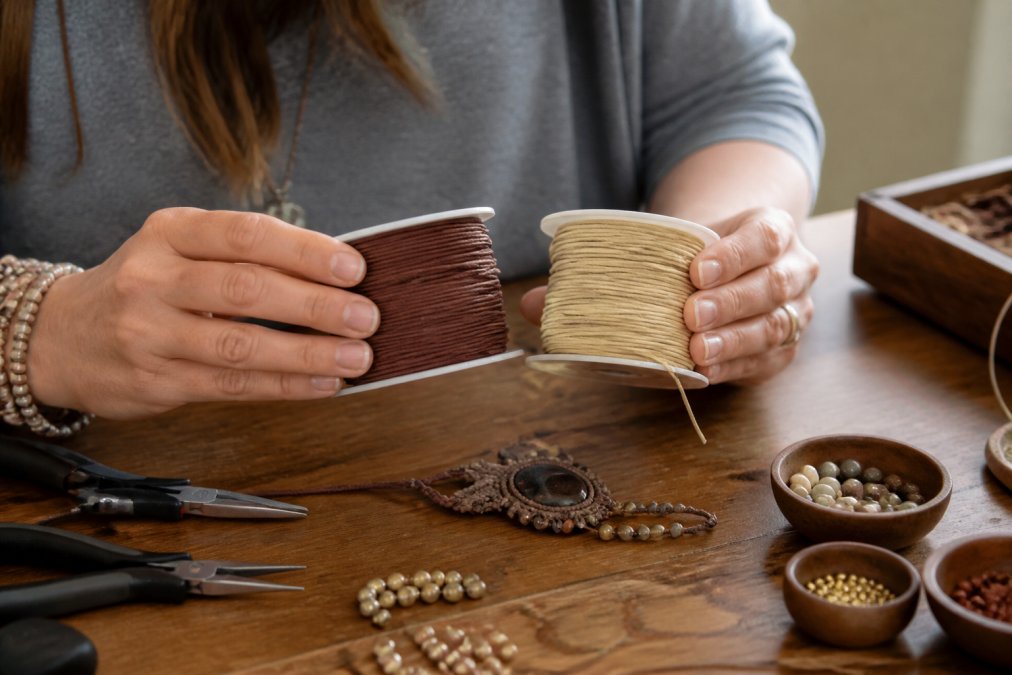
For parents buying kids’ craft kits, quality also means safety and frustration-free assembly. Kits missing pieces or using brittle components turn a fun afternoon into a tantrum. For professionals, subpar materials can compromise an entire commissioned batch. Understanding that material quality is the single variable you control before the work begins changes how you shop.
The material is the project. Skipping quality checks at the purchase stage is the most common reason projects fail later, wasting both money and creative effort.
Understanding Crafting Quality Tiers and What They Mean
Most crafting supplies fall into distinct quality tiers, often indicated by labels like “standard,” “artist grade,” or “professional.” These tiers reflect the consistency of the raw materials and the manufacturing tolerances. Standard tiers are fine for practice; professional tiers offer predictable behavior, such as uniform filament diameter or consistent clay plasticity.
A common approach is to check the specific grading system for your craft. For example, jewelry wire is rated by temper, and 3D printing filament should meet diameter tolerance specs. Understanding these tiers helps you match the material to the project’s demands. A practice piece rarely needs top-tier supplies, but a gift or a saleable item should not rely on budget-grade components.
How to Evaluate Craft Material Durability Before You Buy
Evaluating durability requires moving beyond the marketing copy on the package. For physical crafts, the most reliable method is a controlled stress test that mimics the forces your finished piece will endure. The key is to test the material in the same way it will fail in use.
For cord, thread, and fiber:
- Tensile test: Tie a simple overhand knot and pull steadily. A quality cord should hold firm; a weak one will slip or snap at the knot. For beading cord, a common failure point is the knot itself, so test the knot, not just the straight strand.
- Abrasion test: Rub the cord vigorously against a rough edge, like the rim of a metal finding. If you see significant fraying after 10-15 passes, it will likely fail during stringing or wear (astm.org).
- UV check: If the cord will be exposed to sunlight, check the manufacturer’s spec for UV resistance. Nylon and polyester have different ratings; uncoated nylon degrades quickly in direct sun.
For polymer and air-dry clay:
- Flex test: After curing, bend a thin sample piece to a 90-degree angle. Quality polymer clay should flex slightly before breaking; brittle clay will snap cleanly with no give. This indicates the correct ratio of plasticizer to polymer.
- Bake test: Cure a small sample at the manufacturer’s recommended temperature and time. If it darkens, bubbles, or remains tacky, the clay is either expired or has inconsistent pigment distribution.
- Moisture check for air-dry clay: Weigh a sample before and after drying. A quality air-dry clay should lose a predictable amount of water (typically 20-30% by weight). Excessive shrinkage indicates poor filler content.
For 3D printing filament:
- Diameter consistency: Use a caliper to measure the filament at 10 random points along a 1-meter length. Quality filament should stay within ±0.02 mm of the stated diameter (nist.gov). Variations beyond this cause under-extrusion or jams.
- Moisture test: Listen for popping sounds during extrusion. This indicates absorbed moisture. A filament dryer or a simple oven test at 120°F for 4 hours can reveal if the material is salvageable or if the manufacturer shipped it wet (utah.edu).
- Spool winding: Check the first few layers of the spool. If the filament is not tightly wound or crosses over itself, it will cause tangles and failed prints.
For leather and fabric:
- Scratch test: Use a fingernail to press firmly into the surface. Quality full-grain leather will show a slight mark that rubs away; bonded leather will peel or flake.
- Tear test: Make a small cut at the edge and try to tear it. Quality fabric should resist tearing; a material that rips easily has poor thread count or weak fibers.
Always test a sample in the exact conditions of your project. A material that performs well in a dry, room-temperature studio may fail in a humid basement or a hot garage. The test should replicate the environment, not just the material.
For consumables where physical testing is impossible before purchase, rely on the spec sheet and community verification. Look for published tolerances, not just marketing claims. A manufacturer that lists specific numbers, such as “diameter tolerance ±0.02 mm” or “tensile strength 15 lbs,” is more likely to have quality control than one that only says “premium” or “professional grade.”
Where to Buy Professional Craft Supplies Without the Guesswork
Specialty retailers outperform general marketplaces for professional supplies because they curate their inventory. General platforms aggregate thousands of sellers, making it difficult to verify the origin or consistency of the materials. A dedicated supplier typically tests the products they stock and stands behind them with a clear return policy.
When looking for professional craft supplies, prioritize vendors that specialize in your specific medium, whether that is 3D printing, pottery, or jewelry making. At Craft Living Artistry, we curate a focused selection of kits, cords, beads, and maker tools so you avoid scrolling through countless options.
A Practical Checklist for Verifying Material Quality
Use this checklist before you complete any purchase to ensure you are getting quality crafting materials:
- Check the spec sheet: Does the product list specific tolerances, temper, or grade?
- Read negative reviews: Look specifically for complaints about breakage, warping, or missing pieces.
- Verify the return policy: Ensure you can return defective items without a restocking fee.
- Test a sample: If possible, buy a small quantity first to test compatibility with your tools.
- Inspect on arrival: Open the package immediately and check for damage or defects.
This verification process is a form of quality control that protects your project investment. Taking five minutes to check these details prevents the frustration of discovering a flaw halfway through assembly.
Choosing the Best Kids Craft Kits for Creativity and Safety
When selecting the best kids craft kits for creativity, safety and completeness are the top priorities. A quality kit includes all necessary components in the correct quantities, with no missing pieces that halt the project. Look for kits that use non-toxic, age-appropriate materials and clear instructions.
The best kids craft kits for creativity encourage open-ended play rather than rigid, one-result projects. Kits that offer multiple project ideas or extra supplies allow children to experiment beyond the instructions. This flexibility is what turns a simple craft session into a genuine learning experience about color, texture, and design.
Common Sourcing Mistakes That Waste Time and Money
The most expensive mistake in crafting is not buying cheap materials, it is buying the wrong quality tier for the project’s purpose. Most guides tell you to buy the best you can afford, but that logic fails a simple cost-benefit analysis. The real question is not “Is this material good?” but “Is this material good enough for this specific project, and what is the cost of failure?”
Mistake 1: Ignoring the cost-per-successful-project metric.
A $10 spool of filament that fails 30% of your prints costs you more than a $25 spool that fails 5% of the time. Calculate the cost per successful project, not the cost per spool. For example, if a failed print wastes 100 grams of filament and 3 hours of your time, the true cost of a failure is the material plus your hourly rate. When you factor in your time, the budget option is almost never cheaper.
Mistake 2: Buying top-tier materials for practice or prototyping.
Professional-grade materials are designed for predictable behavior and final-piece durability. Using them for a practice piece or a rough prototype is a waste of money. A common pattern among experienced crafters is to keep a stock of mid-tier materials for testing and reserve top-tier supplies for the final version. The cost-benefit tipping point is usually when the project becomes a gift, a commission, or a piece you will sell. Before that point, mid-tier materials are the financially rational choice.
Mistake 3: Ignoring the hidden costs of shipping and storage.
Bulk buying seems economical, but materials like clay, resin, and filament have shelf lives. An unopened package of polymer clay stored in a hot garage will partially cure and become unusable. Filament absorbs moisture from the air, degrading its quality over months. Before buying in bulk, calculate your actual usage rate and storage conditions. A 10-pound block of clay that you only use 1 pound per month will likely dry out before you finish it.
Mistake 4: Confusing brand reputation with batch consistency.
Even reputable manufacturers have occasional bad batches. A brand that was reliable last year may have changed suppliers or manufacturing processes. The most reliable verification method is to check recent reviews, specifically reviews from the last 30 days, for complaints about breakage, warping, or inconsistency. A brand with a 4.5-star average rating but a cluster of recent negative reviews about a specific batch is a red flag.
Mistake 5: Not accounting for tool compatibility.
A material can be high quality and still be wrong for your tools. For example, a filament with a high melting point may jam in a printer with a PTFE-lined hotend rated for lower temperatures. Similarly, a jewelry wire with a high temper may be too stiff for your specific crimping tool. Always check the material’s operating parameters against your tool’s specifications before purchasing.
The financially smart approach is not to always buy the cheapest or the most expensive, but to match the quality tier to the project’s stakes. Reserve top-tier materials for pieces that will be sold, gifted, or displayed. Use mid-tier materials for practice and prototyping. The money you save on practice pieces will fund the quality materials for your final work.
A practical way to implement this is to maintain a simple ledger of your projects: note the material cost, the failure rate, and the time invested. After a few projects, you will see a clear pattern of where quality spending matters and where it does not. This data-driven approach eliminates the guesswork from sourcing decisions.
Final Thoughts on Finding Materials That Perform
Finding quality crafting materials consistently comes down to verification, not luck. By understanding quality tiers, performing durability checks, and buying from curated sources, you eliminate the guesswork from your creative process. This approach saves money, reduces frustration, and ensures your finished projects reflect the effort you put into them.
Building a reliable supply chain for your craft is an investment in your hobby or business. Whether you are a beginner or a professional, the right materials make the difference between a project that frustrates you and one that inspires you. Quality crafting materials are the easiest way to ensure your creative vision becomes a reality.
Frequently Asked Questions
How do you distinguish between hobby-grade and professional-grade craft supplies?
Hobby-grade materials are made for occasional use and experimentation, while professional-grade options are held to stricter standards for consistency, durability, and finish. Look for clear specifications like tensile strength for cords, firing temperature for clay, or diameter tolerance for 3D printing filament. Professional supplies usually come with detailed technical data sheets. If a seller cannot provide specific numbers about their product’s performance, treat that as a warning sign.
What should I look for when buying 3D printing filaments?
Check the diameter tolerance, which should typically be plus or minus 0.03 mm for consistent feeding. Look for filaments with minimal moisture absorption, as wet filament causes jams and warping. Read reviews about how the filament adheres to the print bed and whether it produces consistent layers. Confirm the seller’s return policy before purchasing, because even good filament can fail if it is not compatible with your specific printer’s settings.
How can I tell if a craft material is durable enough for my project?
Start by matching the material’s specifications to the demands of your project. For jewelry, check cord tensile strength and bead hardness. For pottery, verify the clay’s firing temperature and the glaze’s food-safety rating. For kids’ kits, examine the thickness of paper or cardboard and the quality of adhesives. A simple bend test on cords or a scratch test on painted surfaces can reveal weaknesses that product photos hide.
Are there specific standards for kids’ craft kits to ensure safety and quality?
Yes. In the United States, look for the ASTM D-4236 standard, which confirms art materials have been evaluated for chronic health hazards. Kits should also be labeled as non-toxic and appropriate for the child’s age. Quality goes beyond safety: check that kits include all necessary pieces, clear instructions, and materials that withstand a child’s enthusiastic handling. A reputable brand will list the exact contents and safety certifications on the product page.
Where is the cheapest place to get craft supplies, and is it worth it?
Large online marketplaces often have the lowest upfront prices, but the total cost can rise with shipping fees, waiting time, and the risk of receiving poor-quality materials that need replacing. For bulk orders of basic items like beads or cords, a dedicated supplier is usually cheaper per unit. For specialized materials like professional clay or precision filament, a curated retailer offers better quality control and support, which saves money in the long run.
What crafts are in high demand right now?
Jewelry making, pottery, and 3D printing continue to be popular among both hobbyists and professionals. These crafts have a low barrier to entry but offer deep skill development, making them appealing to beginners and experts alike. Parents are also seeking hands-on craft kits for children that encourage creativity without screens. The common thread is a desire to make tangible objects with quality materials that produce results worth keeping or giving.
Finding the right supplies can be a challenge, especially when you are balancing cost, quality, and convenience. Craft Living Artistry solves this by offering a thoughtfully curated selection of kits, cords, beads, and maker tools in one place. We make crafting accessible for everyone, from kids’ craft kits to professional pottery tools and 3D printing filaments. Get started with Craft Living Artistry and bring your next idea to life with confidence.




0 Comments