
Table of Contents
- Quick Comparison: Top Beads for Professional Jewelry Making
- How We Evaluated These Beads
- 1. Miyuki Delica Beads: The Industry Standard for Precision
- 2. TOHO Seed Beads: Large Holes for Complex Weaves
- 3. Preciosa Czech Glass Seed Beads: Best Seed Beads for Intricate Designs
- 4. High-Quality Gemstone Beads for Jewelry: Kings Beads Collection
- 5. Mini Fuse Beads: Cost-Effective for Graphic Components
- 6. Eva Beads and Roundtrio Beads: Specialty Shapes for Advanced Work
- Matching Beads to Stringing Materials
- Frequently Asked Questions
Last Updated: September 29, 2026
Quick Comparison: Top Beads for Professional Jewelry Making
Choosing the 10 best beads for professional jewelry making comes down to hole consistency, finish durability, and stringing compatibility. This guide covers the beads that hold up, and the ones to skip.
Here is the short version before we get into the details:
Quick Picks:
- Best Overall: Miyuki Delica Beads, unmatched cylinder shape for flat, even beadwork
- Best for Complex Weaves: TOHO Seed Beads, larger holes allow multiple thread passes
- Best Seed Beads for Intricate Designs: Preciosa Czech Glass Seed Beads, uniform glass at a workable price
- Best Gemstone Option: Kings Beads Gemstone Collection, natural semi-precious stones with reliable drilling
- Best Budget Graphic Components: Mini Fuse Beads, thousands of color-accurate beads per pack
| Bead | Starting Price | Best For | Standout Feature |
|---|---|---|---|
| Miyuki Delica | $5.00 per 7g tube | Flat beadwork, loom work | Cylinder shape, tile-like finish |
| TOHO Seed Beads | $4.50 per tube | Multi-pass weaving | Large hole-to-bead ratio |
| Preciosa Czech Glass | $3.00 per hank | Intricate embroidery | Size and shape uniformity |
| Kings Beads Gemstone | $10.00 per strand | High-end custom pieces | Natural stone, consistent drilling |
| Mini Fuse Beads | $15.00 per 10,000 | Graphic components | 2.6mm uniform, 200+ shades |
How We Evaluated These Beads
Every bead here was judged on hole consistency, sizing accuracy, finish durability, and stringing compatibility, plus the sourcing questions that can separate a hobby purchase from a production run.
The four-point quality check
1. Hole consistency. Hold a bead to a bright lamp: clean drilling shows light around the needle at every angle, while an off-center or rough hole means frayed thread and uneven tension. Batch check: string 20 beads on a needle, they should sit level with no wobble.
2. Sizing accuracy. Sizing is nominal: a “6/0” varies between manufacturers and can drift within a single hank. For repeatable product lines, buy one large lot, sort it yourself, and store beads in labeled trays, mixing lots mid-project causes wavy beadwork.
3. Finish durability. Finishes fail by flaking at the hole edge, fading under UV, or wearing off high-contact surfaces. Rub two beads together for 30 seconds and check for color transfer, then sun a sample for a week against a drawer-kept control. Metallic and permanent finishes from Japanese and Czech makers hold up best; budget “color-coated” glass often fails.
4. Stringing compatibility. Check the hole diameter against the two-thirds fill rule below, and confirm the bead works with your chosen material before buying in quantity.
The sourcing questions competitors skip
Most guides stop at “buy from a reputable seller.” The real questions are wholesale terms, batch consistency, and vendor vetting, what determines whether you can produce a repeatable product line.
Wholesale vs. retail. Wholesale pricing kicks in at case or hank quantities, and the per-unit savings can change your margin. The trade-off is cash flow and committing to an untested batch. The professional compromise: buy one retail unit, run the four-point check, then place the wholesale order against that tested specification.
Batch consistency. Color, size, and finish shift between production runs. For a product line, order your full quantity in one purchase and sort before stringing. On reorders, request a sample from the new lot and compare it against your original.
Vendor vetting. Ask whether they can name the manufacturer and country of origin, provide a batch or lot number, disclose whether a gemstone is natural, treated, or synthetic, and restock the same specification.
Before committing to a wholesale order, request a sample of the exact lot you will receive, not a generic sample from the vendor’s catalog. Lot-specific samples are the only way to confirm color, size, and finish match your specification.
What we did not include, and why
Beads were excluded if they failed the rub test, if hole consistency varied within a single tube, or if the vendor could not confirm basic origin information. A bead that cannot survive a 30-second rub test is not a professional material, however it is marketed.
1. Miyuki Delica Beads: The Industry Standard for Precision
Miyuki Delica beads are the benchmark for professional bead weaving: their cylindrical shape locks into a flat, tile-like surface round seed beads cannot match.
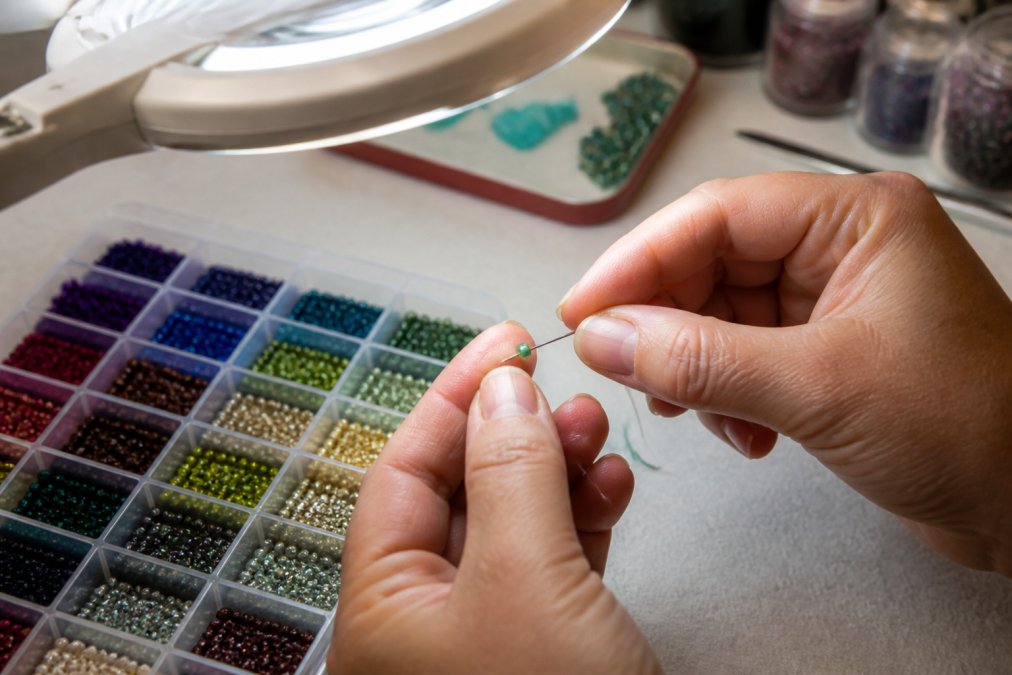
Professional bead weavers producing geometric patterns, loom work, and any design where surface flatness matters.
2. TOHO Seed Beads: Large Holes for Complex Weaves
TOHO seed beads solve a specific problem: when thread must pass through the same bead three or four times, a standard hole will not cooperate. TOHO’s larger hole-to-bead ratio keeps multi-pass weaving smooth.
3. Preciosa Czech Glass Seed Beads: Best Seed Beads for Intricate Designs
Preciosa Czech glass seed beads are the best seed beads for intricate designs needing tight, even stitching without Japanese cylinder-bead prices.
4. High-Quality Gemstone Beads for Jewelry: Kings Beads Collection
High-quality gemstone beads for jewelry bring something no glass bead can: natural stone variation that makes each finished piece one of a kind.
5. Mini Fuse Beads: Cost-Effective for Graphic Components
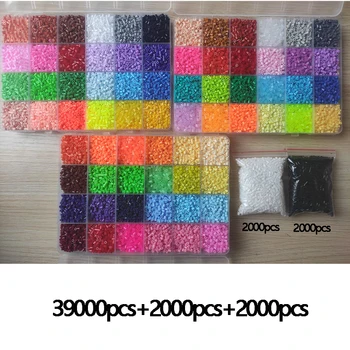
Mini fuse beads are the surprise entry here: at 2.6mm with over 200 shades, they build precise, pixel-style components at a fraction of glass costs.
6. Eva Beads and Roundtrio Beads: Specialty Shapes for Advanced Work
Eva beads and Roundtrio beads are for makers who have outgrown standard seed beads and want structural or sculptural shapes.
Multi-hole beads fail fast when the stringing material is too stiff. A rigid wire will crack the bead at the second hole under tension. Match specialty beads with a flexible option like Beadalon 49-strand wire or silk cord.
Matching Beads to Stringing Materials
A bead only performs as well as the cord or wire holding it. This is where most finished pieces fail, and the easiest problem to prevent.
The hole-to-thread ratio rule
The working rule: the stringing material should fill roughly two-thirds of the bead’s hole diameter. Too thin and the bead slides, abrading thread against the hole wall; too thick and you cannot make a second pass, which kills peyote, brick, and most bead embroidery.
| Bead type | Typical hole size | Thread/wire that fits |
|---|---|---|
| Miyuki Delica 11/0 | ~0.8-0.9 mm | Nylon beading thread (size D or B), 6 lb FireLine |
| TOHO 11/0 round | ~1.0-1.1 mm | Nylon size D, doubled size B, 6-8 lb FireLine |
| Preciosa 11/0 Czech | ~0.9-1.0 mm | Nylon size D, silk size 2-4 |
| 8 mm gemstone round | ~1.0-1.2 mm | Beadalon 49-strand (0.019 in), silk size 6 |
| 6 mm gemstone round | ~0.8-1.0 mm | Beadalon 49-strand (0.015 in), silk size 4 |
| Multi-hole (Roundtrio, Twins) | ~0.8 mm per hole | Flexible nylon or 49-strand only, never rigid wire |
Matching by project type
Bead weaving (Delicas, TOHO, Czech seed beads): Nylon beading thread is the default, thin enough for multi-pass work, with slight give for even tension. FireLine, a braided gel-spun polyethylene, is the abrasion-resistant upgrade and does not fray like twisted nylon, but its near-zero stretch means tension must be right the first time.
Abrasion: the failure mode nobody tests for
Abrasion is the quiet killer of beaded jewelry: every shift of a bead rubs its hole wall against the stringing material, and over hundreds of wear cycles that friction cuts through twisted nylon, silk, and even some coated wires. The fix is not stronger thread but a smoother hole, fire-polished or tumbled holes (most Japanese cylinder beads, high-grade Czech glass, well-drilled gemstones) abrade far less than rough, matte-drilled ones.
Match the stringing material to the hole, not to the bead’s color or price. A two-thirds fill ratio, a flexible material for multi-hole beads, and a smooth hole wall will prevent the three most common professional failures: frayed thread, cracked beads, and sagging strands.
Frequently Asked Questions
Which brand of seed beads is considered the best for professional jewelry making?
Miyuki Delica and TOHO are widely regarded as the top choices for professional work. Miyuki Delica beads are cylinder-shaped and extremely uniform, making them ideal for peyote stitch and loom work where a flat, even surface is critical. TOHO seed beads offer larger holes, allowing multiple thread passes for complex bead weaving. Preciosa Czech glass is another excellent option, especially for intricate designs that require a wide range of finishes. The best choice depends on your specific technique and design goals.
How do I distinguish between professional-grade and hobby-grade beads?
Professional-grade beads have consistent hole sizes, uniform shapes, and durable finishes that resist fading or chipping. Look for brands like Miyuki, TOHO, and Preciosa that maintain strict quality control. Hobby-grade beads often vary in size, have rough or irregular holes, and may use cheaper dyes that wear off. When you string a strand, professional beads line up evenly without gaps or misalignment. Also check that the bead finish is colorfast and tarnish-resistant, especially for metal beads.
Which gemstone beads are most durable for daily wear?
For daily wear, choose gemstones with a Mohs hardness of 7 or higher, such as quartz, amethyst, and agate. These resist scratches and chipping better than softer stones like opal or turquoise. Also consider the bead’s finish: polished stones are less likely to snag on clothing. Pair durable gemstones with a strong stringing material like Beadalon 49-strand wire to prevent breakage. Avoid porous stones that can absorb oils and lose their luster over time.
Are Japanese seed beads better than Czech seed beads for professional work?
Japanese seed beads, like Miyuki and TOHO, are known for their extreme uniformity and precision, which makes them ideal for intricate bead weaving and patterns that require exact alignment. Czech seed beads, such as Preciosa, offer a wider variety of finishes and shapes and are often more affordable. For projects where consistency is critical, Japanese beads are usually preferred. For designs that need unique colors or textures, Czech beads can be a better fit. Many professionals keep both on hand.
How do I source ethically produced beads for my jewelry business?
Look for suppliers who provide transparency about their supply chain, such as stating the origin of gemstones and confirming fair labor practices. Certifications like Fair Trade or the Responsible Jewellery Council can help verify ethical sourcing. For glass beads, brands like Preciosa and Miyuki have published environmental policies. When buying gemstone beads, ask vendors if they source from conflict-free regions. Building relationships with reputable suppliers and asking direct questions is the best way to ensure ethical materials.



0 Comments