
Table of Contents
- Quick Comparison: Professional Pottery Tools at a Glance
- What Makes a Pottery Tool Professional Grade?
- Essential Handbuilding and Cutting Tools
- Professional Clay Carving Tools for Detail Work
- Best Pottery Trimming Tools for Professionals
- Ribs, Scrapers, and Smoothing Tools
- How to Maintain Pottery Tools for Long-Term Studio Use
- Organization, Ergonomics, and Customization
- Frequently Asked Questions
Last Updated: October 1, 2026
Quick Comparison: Professional Pottery Tools at a Glance
Choosing reliable pottery tools for professional projects comes down to five core purchases: a carving tool, ribs, a fettling knife, a trimming tool, and a banding wheel. At Craft Living Artistry, we see the same pattern in every studio that lasts: a small kit of professional-grade pottery tools, maintained well, beats a drawer full of cheap ones.
The table below summarizes this guide’s picks.
| Tool | Price | Best For | Material |
|---|---|---|---|
| DiamondCore P8V Palm Carver | $35 | Sgraffito and detail carving | Steel blade, palm grip |
| Mudtools Polymer Ribs | $10 | Smoothing and compressing | Flexible polymer |
| Dolan 220c Fettling Knife | $22 | Cutting and trimming | High-carbon steel |
| Xiem Precision Trimming Tool | $25 | Foot rings at volume | Stainless steel, replaceable blades |
| Nidec-Shimpo BW-25H Banding Wheel | $120 | Precise banding and decorating | Cast iron |
What Makes a Pottery Tool Professional Grade?
A professional-grade pottery tool holds a sharp edge, resists corrosion, and stays comfortable through hours of daily use. Three factors decide this: blade material, handle ergonomics, and how the tool is joined.
Material Matters: Stainless Steel, Wood, and Polymer
Stainless steel resists rust and holds a fine point for scoring and detailing. High-carbon steel takes a sharper edge but needs oiling to prevent rust, which is why fettling knives use it. Wood handles absorb vibration and stay warm during long sessions. Polymer ribs flex without cracking, which is why potters reach for them over wooden scrapers for curved forms.
Essential Handbuilding and Cutting Tools
Every handbuilding kit starts with four tools: a fettling knife, a needle tool, a cut-off wire, and a slab bevel tool. Together they cover cutting, scoring, and joining.
Wire Cutters, Needles, and Slab Bevel Tools
The Kemper Wire Clay Cutter slices clay off the block and releases pots from the wheel. Braided steel wire and smooth wooden handles make it a tool you will use every session. The wire frays eventually, which is the one weak point.
Store your cut-off wire hanging, not coiled. Kinks in braided wire become break points, and a wire that snaps mid-cut ruins the pot it was releasing.
Professional Clay Carving Tools for Detail Work
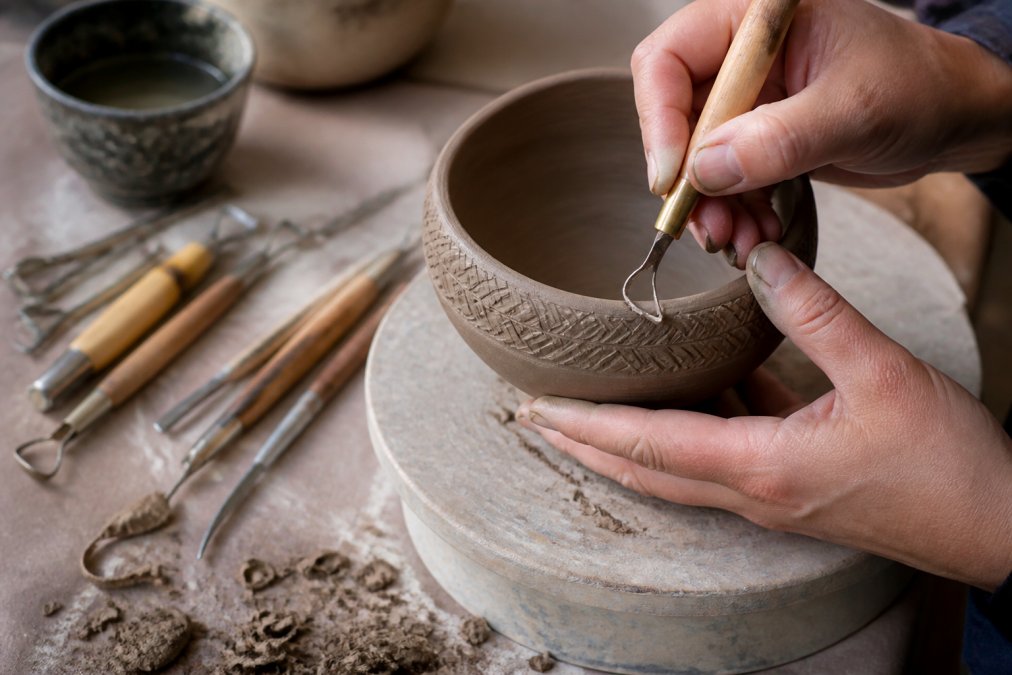
Professional clay carving tools fall into two groups: fixed-blade carvers for consistent depth and replaceable-blade tools for long-term sharpness. For sgraffito and intricate surface work, the blade is everything.
Best Pottery Trimming Tools for Professionals
The best pottery trimming tools for professionals share one trait: a blade you can keep sharp without guesswork. Trimming foot rings demands control, and a dull blade tears clay instead of slicing it.
Ribs, Scrapers, and Smoothing Tools
Mudtools Polymer Ribs are the industry standard for smoothing, compressing, and shaping clay. The color-coded system (Red, Yellow, Green, Blue) maps to different flex levels, so you can match the rib to the form instead of guessing. They resist warping and cracking, though years of heavy professional use will eventually wear them down. Pair ribs with a chamois for burnishing rims and a metal scraper for footing for a smooth finish on wheel-thrown and handbuilt work alike.
Do not leave wooden-handled tools standing in water. The grain swells, the ferrule loosens, and the handle eventually separates from the blade. Wipe them dry and store them handle-down.
How to Maintain Pottery Tools for Long-Term Studio Use
Knowing how to maintain pottery tools is what separates a kit that lasts a decade from one you replace every year. But maintenance is not one routine, it is three, split by material, because steel, wood, and polymer fail in completely different ways.
Steel: Edge Retention and the Rust Clock
High-carbon steel and stainless steel are not the same maintenance problem, and treating them the same is how tools die early.
Wood: The Swell-and-Split Cycle
Wooden handles fail from the inside out. The grain absorbs water, swells, then shrinks as it dries, and every cycle loosens the ferrule that holds the blade. Once the ferrule loosens, the handle and blade separate, and the tool is done. The fix: never stand wooden-handled tools in a water jar, wipe them dry after use, and re-oil the handles occasionally with a food-safe oil or commercial wood-handle conditioner.
Polymer and Wire: Wear, Not Rust
Polymer ribs do not rust, but they dull and eventually crack at the flex point. Wipe them with a damp cloth after use; avoid solvents, which degrade the surface and make clay stick. A rib that has lost its smooth edge drags across a pot instead of compressing it, replace it rather than fighting it.
A Maintenance Schedule That Actually Holds Up
- After every session: Dry all steel blades; oil high-carbon steel; wipe polymer ribs; hang the cut-off wire
- Weekly: Check wire for fraying; inspect replaceable blades for drag; wipe down handles
- Monthly: Re-oil wooden handles; check ferrules for looseness; rotate or replace worn ribs
- As needed: Swap replaceable blades at the first sign of drag, never sharpen them
The single most common mistake is sharpening a replaceable-blade tool instead of swapping the blade. You grind away the geometry that made it cut well in the first place, and you never quite get it back. Treat blades as consumables and handles as long-term investments, that split is what keeps a professional kit running for years.
Organization, Ergonomics, and Customization
This is the section most pottery tool guides skip, and it decides whether you are still throwing pots at 60 or icing a wrist at 40. Function gets you a clean cut; ergonomics, organization, and customization get you a career. No top-ranking guide covers repetitive strain injury (RSI) prevention for professional potters, so we go deeper here.
Ergonomics: Preventing Repetitive Strain Before It Starts
Pottery is a high-repetition craft. Wedging, centering, pulling, trimming, and carving all load the same small muscle groups, wrists, thumbs, and forearms, thousands of times a session. Discomfort creeps in gradually and gets blamed on “a long day” until it becomes chronic.
Numbness, tingling, or a dull ache that persists after you stop working is not normal soreness, it is an early warning. Adjust your setup and your tool grips before it becomes an injury that sidelines you for weeks.
Organization: A Professional Workflow, Not a Drawer
Professional workflows require efficient tool management, and this is the practical angle most guides ignore. The principle is simple: the tools you use most should sit within arm’s reach of the wheel, sorted by function rather than size. Reaching across the studio for a rib every few minutes is not just inefficient, it is an ergonomic cost you pay hundreds of times a session.
A few setups that hold up in real studios:
- Wall-mounted magnetic strips hold fettling knives, needle tools, and trimming tools where you can see them and grab them without looking. This also keeps blades off the bench where they can nick a pot.
- Shallow open bins or trays for ribs and scrapers, sorted by flex level, so you grab the right one without digging.
- A dedicated wire hook for cut-off wires, hanging, never coiled.
- A point-down rack or cork block for needle tools, so the points stay protected and your hands stay safe.
Customization: Hacking Tools for Your Forms
Customization goes further than most guides admit, and it is one of the highest-value skills a professional potter can develop. Off-the-shelf tools are designed for an average hand and an average form, yours are not average.
Common modifications that experienced potters make:
- Grinding loop tools to custom profiles, a round loop ground to a V or a flat edge carves a different line, and a tool shaped for your specific sgraffito pattern cuts cleaner than any stock tool.
- Shortening handles for palm use, a long handle that works on a table becomes unwieldy over a wheel; cutting it down and re-seating the ferrule turns a general tool into a palm tool.
- Mounting ribs on dowels, a rib glued or pinned to a dowel lets you reach inside tall forms and compress walls you could not otherwise smooth.
- Wrapping handles in silicone tape, the cheapest ergonomic upgrade available, and fully reversible.
- Reshaping needle tools, bending the point slightly can make it easier to score at an angle without contorting your wrist.
Frequently Asked Questions
What are the essential pottery tools for professional work?
A professional pottery toolkit includes a fettling knife for clean cuts, a potter’s needle for scoring and detailing, wire clay cutters for removing pots from the wheel, polymer ribs for smoothing, a banding wheel for precise decoration, and a set of loop and ribbon tools for trimming and carving. Each tool serves a specific purpose, and investing in high-carbon steel or stainless steel versions ensures the durability needed for daily studio use.
How do you choose high-quality pottery carving tools?
Look for blades made from high-carbon steel or stainless steel that hold their edge through repeated use. Ergonomic handles reduce hand fatigue during long carving sessions, which matters when working on intricate sgraffito or detailed surface patterns. Replaceable blade systems, like those found on precision trimming tools, extend the tool’s working life without sharpening. Pricing depends on the specific tool and brand, so check Craft Living Artistry’s website for current options.
Are stainless steel pottery tools better than wooden ones?
Stainless steel resists rust and holds a sharp edge longer, making it ideal for cutting, trimming, and carving tools that contact wet clay daily. Wooden tools, such as ribs and modeling sticks, offer flexibility and a softer touch for smoothing and shaping without scratching. Many professional potters use both: stainless steel for precision cutting and wooden or polymer tools for surface work. The best choice depends on the specific task and your working style.
How do you maintain professional pottery tools to ensure longevity?
Clean clay residue from metal tools after each session and dry them thoroughly to prevent rust, especially on high-carbon steel blades like fettling knives. Apply a light coat of oil to carbon steel periodically. Replace worn polymer ribs when they lose their edge, and swap out trimming blades once they stop cutting cleanly. Store tools in a dry rack or roll to protect edges and keep everything organized for the next project.
What makes a pottery tool professional grade?
Professional-grade pottery tools are built from materials that withstand daily studio use: high-carbon steel blades that stay sharp, cast iron banding wheels that spin smoothly for years, and polymer ribs that resist warping. They also feature ergonomic designs that reduce strain during long sessions. Durability and precision separate professional tools from entry-level options, and the upfront cost is offset by fewer replacements and better results on finished work.



0 Comments