Last Updated: November 4, 2026
Quick Summary
Eco-friendly art supplies are materials that use renewable or recycled content, avoid harsh chemicals, and come in packaging that breaks down or gets recycled. Look for the AP seal from the ACMI as the safety baseline, and check the back of the package for specific recycled content percentages rather than leaf icons.
- The word eco carries no legal weight on a craft package, so check the back label.
- Non-toxic supplies carry an AP or CL seal and list ingredients or material sources clearly.
- Cardboard, newspaper, fabric scraps, and egg cartons work well; greasy pizza boxes do not.
- Buy refill packs instead of new bottles and choose water-based paints over aerosol.
- Match supplies to your child’s age and dexterity rather than stocking up on many colors.
Table of Contents
- What Actually Makes Art Supplies Eco-Friendly
- How to Choose Non-Toxic Art Supplies for Kids
- Why Eco-Friendly Craft Kits for Kids Beat Piecemeal Buying
- Recycled Craft Materials for Kids: What Works and What Doesn’t
- Low-Waste Kids’ Crafts: Cutting the Trash Without Cutting the Fun
- Common Mistakes Parents Make When Buying Green Supplies
- Picking the Right Eco-Friendly Art Supplies for Your Kid
- Frequently Asked Questions
What Actually Makes Art Supplies Eco-Friendly
Choosing eco-friendly art supplies for kids starts with one question: what happens to this stuff after the project ends? Most parents assume “natural” on a label means safe and green. That assumption costs money and, sometimes, peace of mind.
When judging whether something is eco-friendly, look at three things: what it’s made from, what it’s wrapped in, and what it leaves behind. A crayon made from soy wax in a plastic sleeve is half a green product. A paint with plant pigments in a recyclable bottle is closer to the real thing.
Here’s the short version. Eco-friendly art supplies are materials that use renewable or recycled content, avoid harsh chemicals, and come in packaging that breaks down or gets recycled. That’s the working definition. Everything else is marketing.
The Three Labels That Matter
Ignore the front of the package. Flip it over.
- AP (Approved Product) seal: from the ACMI, a nonprofit that runs a toxicology program for art materials. This is the safety baseline.
- Recycled content claims: look for a specific percentage, not a leaf icon.
The ACMI’s safety certification program explains exactly what each seal covers, and it’s worth two minutes of your time.
Where Greenwashing Hides
Watch out: the word “eco” carries no legal weight on a craft package. Neither does “green” or “earth-friendly.” Brands slap those on plastic glitter and call it a day.
The tell is usually the packaging. Recyclable cardboard with a soy-based ink? Good sign. A sealed plastic clamshell inside a plastic bag inside a box? That’s a lot of waste for a product selling sustainability.
How to Choose Non-Toxic Art Supplies for Kids
Non-toxic art supplies for kids carry an AP or CL seal and list their ingredients or material sources clearly. If a package hides the contents, put it back on the shelf. That single rule filters out most of the junk.
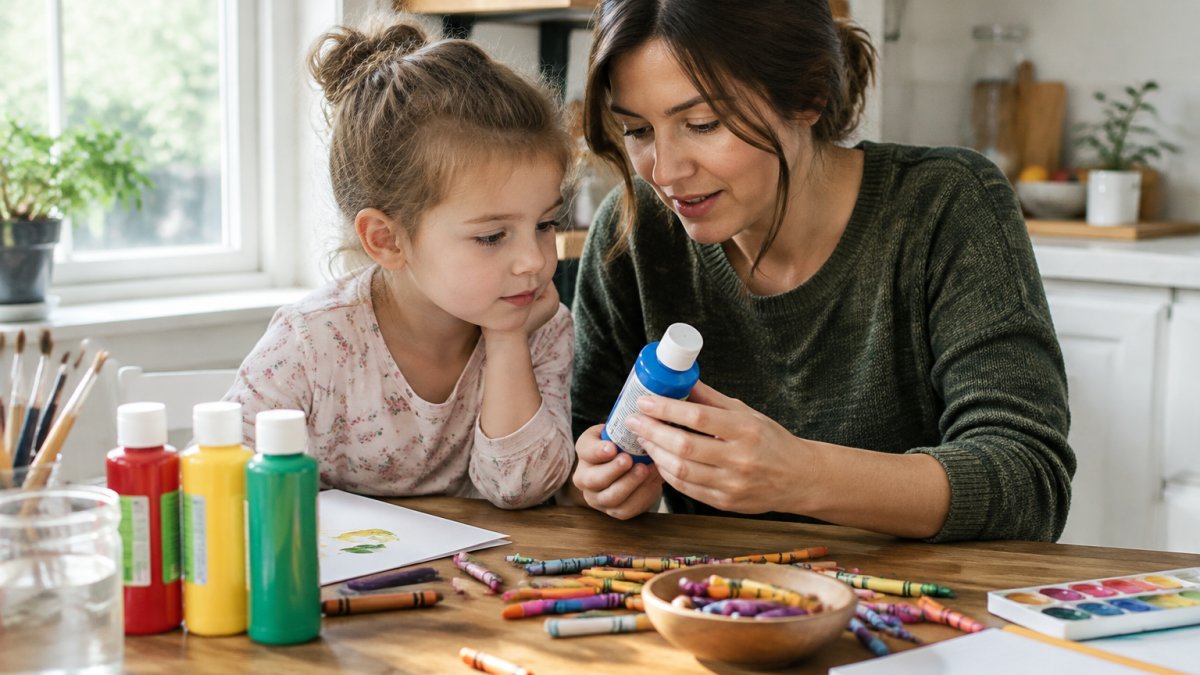
Beyond the seal, use this checklist:
- Does the label name the pigments or materials?
- Is there an age recommendation that matches your child?
- Are the pieces small enough to be a choking risk?
- Can the packaging be recycled curbside?
- Does the brand publish safety info online?
If your child wants a paper project specifically, a kids paper cut craft kit is a low-mess, low-risk starting point. Paper tears, folds, and recycles. It’s hard to beat on safety.
Water-based formulas are generally a gentler choice than solvent-based ones for young children.
Why Eco-Friendly Craft Kits for Kids Beat Piecemeal Buying
Buying glue, paint, paper, and brushes separately can mean several packages, several sets of instructions, and leftover material. Choosing a kit can bundle a project into one set of supplies.
That matters more than most parents realize. Half-used bottles can dry out, and extra paper can end up unused in a drawer.
For a closer look at curated options, see our roundup of eco-friendly craft kits for children. And when you’re ready to match a kit to your child’s age and interests, this guide on choosing educational craft kits walks through the decision step by step.
Recycled Craft Materials for Kids: What Works and What Doesn’t
Recycled craft materials for kids work best when the material is clean, sturdy, and safe to cut. Cardboard, newspaper, fabric scraps, and egg cartons are reliable. Greasy food containers and anything with a glossy coating are not.
What works:
- Cardboard boxes, cut into shapes
- Newspaper for papier-mâché
- Fabric scraps for collages
- Egg cartons for sculpture
- Old magazines for collage
What doesn’t:
- Greasy pizza boxes, which stain and smell
- Plastic containers with sharp cut edges
- Anything that held cleaning products
- Foil with food residue
For ready-made project ideas, our collection of seasonal art projects from household items turns the recycling bin into a weekend activity.
Recycled materials are only worth saving when they are clean, sturdy, and safe to cut, so here is the quick split.
| Material | Works or not | Note |
|---|---|---|
| Cardboard boxes | Works | Cut into shapes |
| Newspaper | Works | For papier-mâché |
| Fabric scraps | Works | For collages |
| Egg cartons | Works | For sculpture |
| Old magazines | Works | For collage |
| Greasy pizza boxes | Doesn’t work | Stain and smell |
| Plastic containers with sharp cut edges | Doesn’t work | Sharp cut edges |
| Anything that held cleaning products | Doesn’t work | Not safe to reuse |
Low-Waste Kids’ Crafts: Cutting the Trash Without Cutting the Fun
Low-waste kids’ crafts focus on materials that get used up or reused, not thrown out. The trick is picking projects where the leftovers have a second life.
A few habits that cut waste fast:
- Buy refill packs instead of new bottles
- Choose water-based paints over aerosol
- Save scraps in one bin for future projects
- Pick kits with minimal packaging
Kids don’t need fancy supplies to stay engaged. They need materials that work and a project that feels achievable.
Common Mistakes Parents Make When Buying Green Supplies
A common mistake is trusting the front label of a package without checking the back.
A common trap: stocking up on eco-friendly paint in twelve colors when your kid only reaches for three. The rest dries out. That’s waste dressed up as a bargain.
Another one: skipping the age rating. A kit labeled for ages 8 and up often includes small parts that are a hazard for a four-year-old sibling.
And a third: assuming “natural” means non-toxic. Plant-based doesn’t automatically mean safe to ingest. The AP and CL seals are the claims that actually mean something.
Picking the Right Eco-Friendly Art Supplies for Your Kid
Match the supplies to your child, not to the trend. A toddler needs chunky, washable, non-toxic basics. A tween ready for detail work can handle finer tools and more complex kits.
Consider three factors:
- Age and dexterity: bigger pieces for smaller hands
- Interest: drawing, building, or jewelry-making
- Your tolerance for mess: water-based and paper projects clean up fastest
If you want a shortlist to compare against these criteria, our guide to the best kids craft kits for creativity is a good next stop. Start small, see what sticks, then expand.
The real test of any supply is whether your child uses it up before it dries out. That’s where a focused, curated selection helps. Craft Living Artistry offers a focused selection of kids’ craft kits, jewelry-making essentials, and maker tools in one place. Browse the kids’ craft kits, check the material lists, and pick one project to start this weekend. Get started with Craft Living Artistry and turn a rainy afternoon into something your kid actually finishes.
Frequently Asked Questions
What makes art supplies eco-friendly?
Eco-friendly art supplies limit harm at two points: what’s inside them and what happens after use. Look for plant-based or water-based formulas, recycled or FSC-certified paper, refillable or compostable packaging, and third-party certifications like AP (Approved Product) seals or Green Seal. A supply can be non-toxic but still wasteful if it ships in layers of plastic, so check both the ingredients and the packaging before you buy.
How can I tell whether kids’ art supplies are non-toxic?
Start with the AP (Approved Product) seal from the ACMI, which means the product has been reviewed by a toxicologist and is safe for children. Check the labeling carefully, and read any cautionary warnings on the package. For paint, markers, and clay, check that the label says water-based and lists ingredients. If a product has no ingredient list or certification at all, treat that silence as a reason to look elsewhere.
Are recycled and biodegradable craft materials safe for kids?
Usually yes, with two checks. First, confirm the recycled content is clean and food-safe if a child might mouth it, since post-consumer paper and cardboard can carry inks or residues. Second, watch for small parts on biodegradable items, which still pose a choking risk for kids under three. Reputable eco-friendly craft kits for kids state both the recycled content and the age rating, which makes the safety call much easier.
How do I reduce waste during kids’ art projects?
Plan low-waste kids’ crafts around reusable bases: a washable mat instead of newspaper, refillable glue bottles, and scrap bins sorted by color so leftovers get used again. Buy kits that match a single project so you aren’t left with half-used supplies, and choose water-based paints and markers that rinse clean rather than staining and getting thrown out. Small habit changes like these cut the trash pile without shrinking the creative mess kids actually need.




0 Comments