Table of Contents
- Why Craft Kits Work for Stress Relief
- Beginner-Friendly Craft Kits That Actually Work
- Mindful Crafting for Anxiety: Kits Built for Focus
- Quick Comparison: Top Craft Kits by Type and Price
- How to Start a Crafting Hobby for Stress Relief
- Budget-Friendly vs. Premium: What’s Worth the Investment
- Storage and Organization for Your Craft Supplies
- Conclusion: Finding Your Creative Outlet
- Frequently Asked Questions
Last Updated: September 18, 2026
Hands-on creative work activates the brain’s reward centers and reduces cortisol levels. The best craft kits for creative stress relief combine accessibility with genuine therapeutic benefit. At Craft Living Artistry, we’ve curated kits designed to help you find the right creative practice.
Why Craft Kits Work for Stress Relief
Crafting isn’t just a hobby, it’s a neurobiologically grounded stress management technique. When you engage in hands-on creative work, your brain undergoes measurable changes that reduce anxiety and promote emotional regulation.
The Neuroscience of Flow State
When you focus on a craft, your prefrontal cortex (responsible for self-critical thoughts) becomes less active, and your default mode network (which generates anxious rumination) quiets down. This state, called “flow,” involves your brain literally stopping threat-signal processing, a shift in neural activity that mirrors meditation.
Repetitive crafts like knitting engage your motor cortex and create rhythmic patterns your brain finds soothing. Detail-oriented crafts like miniature building activate your visual cortex, creating “absorptive focus” where your brain becomes so engaged there’s no bandwidth left for anxiety.
Cortisol Reduction and Tactile Input
Crafting triggers a measurable drop in cortisol by stimulating mechanoreceptors in your hands, specialized nerve endings that send calming signals to your brain. Hand-based crafts outperform screen-based activities because your hands contain more sensory nerve endings than almost any other body part.
Why Completion Matters
Finishing a craft project triggers dopamine release, the neurotransmitter associated with reward and motivation. This is why quick-win crafts like paint-by-numbers or candle-making provide immediate psychological benefit, while longer projects like knitting build sustained engagement. Both have merit: quick wins provide acute stress relief, while long-form projects create a sense of ongoing purpose and accomplishment.
The best craft kit for you isn’t necessarily the most popular one; it’s the one that matches your nervous system’s needs. If you’re prone to racing thoughts, choose a craft demanding enough to occupy your prefrontal cortex fully (miniature building, jewelry making). If you’re physically tense, choose something rhythmic and tactile (knitting, embroidery). If you need quick wins, choose something completable in one session (paint-by-numbers, candle-making).
Beginner-Friendly Craft Kits That Actually Work
Starting a new hobby can feel intimidating, but the right beginner-friendly craft kits remove that barrier. These options are designed for people with zero prior experience and include everything you need to succeed on your first try.
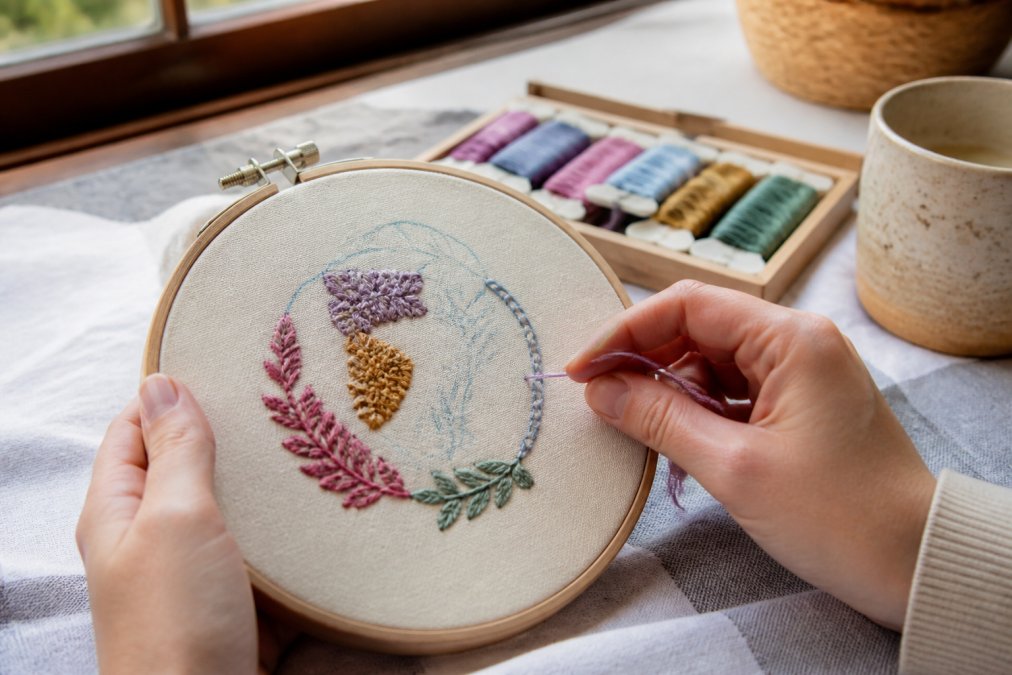
Embroidery Starter Kits are ideal for beginners. You get pre-printed fabric, needles, thread, and stitch guides. Basic stitches take minutes to master, and the portable nature lets you work anywhere. The repetitive motion is profoundly calming, though projects take weeks and poor lighting causes eye strain.
Paint-by-Numbers Kits eliminate blank-canvas anxiety by numbering every section. You follow the guide and create polished artwork in 5-10 hours. They appeal to people who feel they “can’t draw,” though some find them less meditative than true creative expression.
Needle Felting Kits offer tactile work producing 3D figures. You sculpt wool roving with barbed needles in a rhythmic, forgiving process where mistakes blend in. It’s excellent for anxiety-prone beginners, though sharp needles require careful handling and repetitive motion can cause hand fatigue.
Mindful Crafting for Anxiety: Kits Built for Focus
If your goal is anxiety management, you need kits that demand enough attention to quiet racing thoughts but not so much that they cause frustration. These options are specifically designed for the meditative, flow-state experience.
Knitting and Crochet Kits are classic anxiety-relief crafts. The repetitive motion creates a rhythmic, hypnotic effect while your hands stay busy and mind settles. Quality kits include premium yarn and video tutorials. Once you master basic stitches, the work becomes automatic, ideal for anxiety management with weeks or months of sustained engagement.
Miniature Building Kits (like Rolife’s Book Nook sets) demand deep focus through assembling intricate pieces, painting details, and installing lighting. Projects take 20-40 hours, ideal for long-term commitment, though they require dedicated workspace and fine motor patience.
Candle and Soap Making Kits combine sensory engagement (fragrance, color, heat) with practical outcomes. The quick 2-3 hour process delivers fast completion satisfaction plus aromatherapy benefits.
The most effective anxiety-relief kits are those you’ll actually use regularly. A complex kit gathering dust is worthless. Choose based on how much time you realistically have and what sensory input appeals to you most.
Quick Comparison: Top Craft Kits by Type and Price
| Kit Type | Best For | Time to Complete | Price Range | Key Benefit |
|---|---|---|---|---|
| Embroidery | Portable, low-stress work | 3-8 weeks | $12-20 | Rhythmic, meditative |
| Paint-by-Numbers | Quick wins, anxiety relief | 5-10 hours | $15-30 | No blank-canvas anxiety |
| Needle Felting | Tactile sensory input | 2-5 hours per project | $20-35 | Forgiving, hands-on |
| Knitting/Crochet | Long-term focus, anxiety management | 4-8 weeks | $50+ | Rhythmic, sustainable engagement |
| Miniature Building | Deep absorption, meditative | 20-40 hours | $35-50 | Highly engaging, beautiful result |
| Candle Making | Sensory-rich, quick gratification | 2-3 hours | $25-35 | Aromatherapy + practical outcome |
| Pottery (Air-Dry) | Tactile, no equipment needed | 3-5 hours | $79 | Premium materials, functional items |
How to Start a Crafting Hobby for Stress Relief
Step 1: Identify your sensory preference. Choose tactile (needle felting, pottery), visual (paint-by-numbers, candle-making), or rhythmic (knitting, embroidery) to narrow down which kit will stick.
Step 2: Assess your time commitment. Quick-win kits suit busy people; long-form kits suit those wanting deep engagement.
Step 3: Start with one complete kit. A complete kit removes decision fatigue and guarantees you have everything needed. Craft Living Artistry kits are thoughtfully curated with all supplies included, so you can start immediately.
Step 4: Create a dedicated space. A small corner with good lighting and comfortable seat signals to your brain that this is important time.
Step 5: Set a realistic schedule. Two or three sessions weekly beats daily intentions you’ll break. Consistency matters more than intensity.
Budget-Friendly vs. Premium: What’s Worth the Investment
Understanding where to invest prevents overspending and buying kits that frustrate rather than soothe.
Budget-Friendly Kits ($12-30): Best for Testing and Quick Wins
Budget kits include embroidery, paint-by-numbers, and needle felting. They’re ideal for testing crafts, quick-win stress relief, and busy professionals. Materials are adequate but not premium, though an embroidery kit can deliver the same neurobiological calm as a more expensive kit if the craft matches your preferences.
Mid-Range Kits ($30-50): Best for Committed Hobbyists
Mid-range kits include quality knitting, premium candle-making, and natural soap-making. Materials noticeably improve the experience, projects are more durable, and the craft becomes more absorbing. Mid-range can represent a good value for stress relief.
Premium Kits ($50+): Best for Specific Situations
Premium kits include professional pottery, high-end miniature building, and luxury jewelry-making.
Value-for-Money Matrix by Use Case
| Scenario | Recommended Tier | Why | Example Kit Price |
|---|---|---|---|
| Testing a new craft | Budget | Low financial risk, quick feedback | $15-20 |
| Busy professional (30 min/week) | Budget to Mid-Range | Quick-win or portable projects | $20-35 |
| Regular crafter (3+ hrs/week) | Mid-Range | Better materials, sustained engagement | $35-50 |
| Committed hobbyist (5+ hrs/week) | Mid-Range to Premium | Skill development, quality outcomes | $40-70 |
| Gift for experienced crafter | Premium | Respects their expertise, supports advancement | $50+ |
| Seeking fastest stress relief | Budget | Paint-by-numbers, candle-making | $15-25 |
| Seeking deep absorption | Mid-Range to Premium | Miniature building, advanced pottery | $40-79 |
Avoid the trap of buying multiple kits at once to “find your craft.” You’ll end up with unused supplies and wasted money. Buy one kit at your appropriate tier, commit to it for 2-3 weeks, then decide if you want to expand or upgrade. This approach also prevents decision fatigue, which ironically increases stress.
Storage and Organization for Your Craft Supplies
Once you commit to crafting, supplies accumulate. Smart storage keeps your hobby enjoyable instead of chaotic.
Conclusion: Finding Your Creative Outlet
The best craft kits for creative stress relief are determined by what holds your attention, matches your schedule, and engages your senses to quiet your mind. Start with one complete kit aligned with your sensory preferences and time availability, and commit for at least three weeks.
Frequently Asked Questions
What are some creative crafts that can help relieve stress?
Repetitive, hands-on crafts work best for stress relief because they engage your focus and quiet anxious thoughts. Embroidery, crochet, needle felting, and paint-by-number all fit this pattern. Pottery and miniature building offer deeper immersion for longer sessions. The key is choosing a craft that feels low-pressure, one where mistakes don’t derail the final result. Craft kits take the guesswork out by providing everything you need and clear instructions.
How do craft kits help with anxiety?
Craft kits reduce anxiety by removing decision fatigue and setup friction. Instead of sourcing materials or planning a project from scratch, you open a kit and start immediately. The repetitive motions in activities like crochet or embroidery trigger a meditative state, similar to mindfulness. Completing a tangible project also provides a sense of accomplishment, which counters the helplessness anxiety creates. Beginner-friendly kits eliminate the fear of failure, letting you focus purely on the calming process.
What should I look for when choosing a beginner-friendly craft kit?
Look for kits that include all materials, clear instructions, and projects you can finish in one or two sessions. Avoid kits requiring specialized tools you don’t already own. Check that the learning curve is gentle, pre-printed patterns or numbered canvases remove the artistic barrier. Read reviews mentioning whether pieces were missing or instructions were confusing. Budget matters too: starter kits are available at various price points, so pick one that feels like a low-risk experiment, not a major investment.
How much time should I expect to spend on a craft kit project?
Time varies widely. Paint-by-number and embroidery kits typically take 5 to 15 hours spread across multiple sessions. Candle or soap making can be completed in 1 to 2 hours. Miniature building and detailed wooden puzzles demand 20 to 40 hours of focused work. Choose based on your schedule: if you have 15 minutes daily, pick portable projects like embroidery. If you want immersive weekend projects, miniature kits reward deep focus and deliver that flow state that anxiety interrupts.




0 Comments