Table of Contents
- Quick Comparison: 5 Best Sterling Silver Earring Making Kits
- How We Evaluated These Sterling Silver Earring Kits
- 1. Craft Living Artistry Curated Earring Kit: Best for All Skill Levels
- 2. Halstead Sterling Silver Post Earring Making Kit: Best for Learning Soldering
- 3. Etsy 5 Pairs Sterling Silver Post Earring Kit: Best Budget Starter
- 4. Amazon 925 Sterling Silver Earring Findings Kit: Best Bulk Value
- 5. Gionlion Jewelry Making Kit: Best for Design Variety
- Essential Jewelry Making Tools for Beginners
- Frequently Asked Questions
Last Updated: September 16, 2026
Quick Comparison: 5 Best Sterling Silver Earring Making Kits
The 5 best sterling silver earring making kits balance genuine 925 sterling silver components with the tools and instructions a beginner actually needs. This guide from Craft Living Artistry compares five kits across material quality, included tools, and skill level so you can pick the right one without wasting money on silver-plated substitutes.
Here’s the short version before the detail:
| Kit | Starting Price | Material | Best For | Tools Included |
|---|---|---|---|---|
| Craft Living Artistry Curated Earring Kit | Varies by selection | Sterling silver components | All skill levels | Yes |
| Halstead Post Earring Kit | $63.36 | 925 sterling silver | Learning soldering | No torch |
| Etsy 5 Pairs Post Kit | $13.59 | 925 sterling silver posts | Budget beginners | Basic pliers |
| Amazon 925 Findings Kit | $11.99 | 925 sterling silver hooks | Bulk buyers | No |
| Gionlion Jewelry Making Kit | $15.00 | Silver-plated | Design variety | Yes |
How We Evaluated These Sterling Silver Earring Kits
Every kit here was judged on five things: metal purity and hallmarking, nickel content and hypoallergenic suitability, tool quality and longevity, component variety, and whether a beginner could finish a wearable pair without buying extra supplies.
Metal purity and the .925 stamp
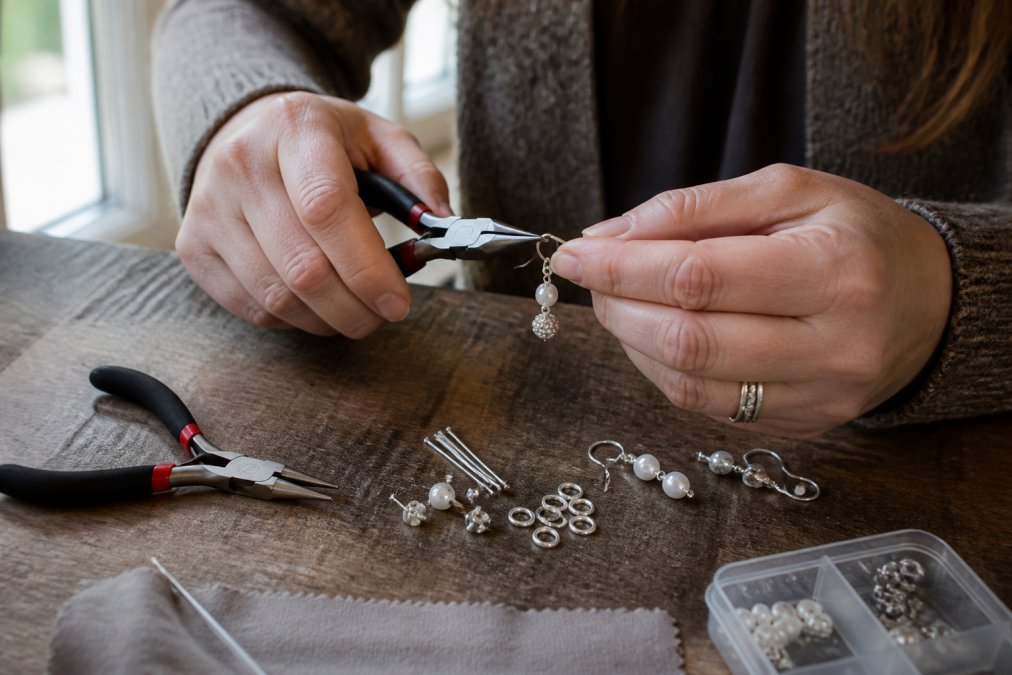
Sterling silver is defined by its alloy, not its color. The standard composition is 92.5% silver and 7.5% copper (or another hardening metal), which is why the material is stamped “.925” or “sterling.” That stamp is a legal representation, not decoration: under the National Gold and Silver Stamping Act, a piece marked “sterling” must meet the minimum fineness standard, and the FTC guidance on jewelry marketing claims requires sellers to describe plated and filled materials accurately rather than implying they are solid silver.
Nickel content and hypoallergenic claims
“Hypoallergenic” is a marketing term, not a regulated one, so it means very little on its own. The reaction most buyers are trying to avoid is contact dermatitis triggered by nickel, which is one of the most common metal allergens (pubmed.ncbi.nlm.nih.gov). Sterling silver itself is generally well tolerated because its alloying metal is copper rather than nickel, but the risk creeps back in through findings that are sterling-plated over a nickel-bearing base, or through ear wires sourced from mixed lots.
Tool quality and longevity
Tool quality carries more weight than most buyers expect, and it’s the criterion competitors almost never examine. Cheap round nose pliers develop jaw misalignment after a few dozen bends, which throws off every wire loop you form afterward. Flush cutters made from soft steel dull quickly and start leaving burred wire ends that scratch skin. Chain nose pliers with loose pivot joints wobble instead of gripping.
Component variety and completeness
Variety matters less than fit. A kit with 500 jump rings but no ear wires won’t finish a pair of earrings. We weighted kits that include the full chain of parts, ear wires or posts, backs, jump rings, and head pins or eye pins, so a beginner can complete a project without a second order.
Beginner viability
The final test is simple: could someone with no jewelry experience open the box and finish a wearable pair of earrings the same day? Kits that require a soldering torch, a bench block, or a jeweler’s saw fail this test by design, and we’ve flagged them as skill-building kits rather than starter kits.
Check whether a kit’s findings are stamped “.925” or “sterling.” Reputable suppliers stamp their components. If the listing photos don’t show a stamp, ask the seller before ordering.
Purity, nickel content, and tool steel are the three things a listing photo won’t tell you. Ask the seller for all three before you buy.
1. Craft Living Artistry Curated Earring Kit: Best for All Skill Levels
Our top pick is the Craft Living Artistry curated earring kit because it assembles everything a maker needs in one place: sterling silver findings, cords, beads, and the pliers to work them. The brand’s whole model is curation over endless scrolling, which matters when you’re new and don’t yet know which findings you actually need.
Pros and Cons
Pros:
- Curated selection removes guesswork for beginners
- Complete kits, no missing-piece surprises
- Covers hobbyist and professional needs in one store
Cons:
- Pricing varies by selection, so you’ll need to check the site for current figures
- Fewer deep-discount bulk options than a large marketplace
Who It’s Best For
Anyone who wants a single, complete starting point. If you’ve been burned by a kit missing half its pieces, this is the fix.
2. Halstead Sterling Silver Post Earring Making Kit: Best for Learning Soldering
Halstead’s kit is the one to buy if you want to learn how to solder sterling silver earrings properly. It ships with materials for 10 complete pairs of 925 sterling silver post earrings and is built around developing foundational soldering skills rather than simple assembly.
Pros and Cons
Pros:
- Authentic 925 sterling silver throughout
- Teaches a skill that transfers to every future project
Cons:
- Requires a soldering torch, sold separately
- Higher upfront cost than assembly-only kits
3. Etsy 5 Pairs Sterling Silver Post Earring Kit: Best Budget Starter
For a true all-in-one starter at the lowest entry point, the Etsy 5 Pairs kit is hard to beat at $13.59. It includes five pairs of 925 sterling silver posts, jump rings, earring backs, and basic pliers, with components made domestically.
Pros and Cons
Pros:
- Genuine 925 sterling silver posts at a beginner price
- Includes tools, so it’s genuinely complete
Cons:
- Simple assembly only, no advanced techniques
4. Amazon 925 Sterling Silver Earring Findings Kit: Best Bulk Value
If you already own jewelry pliers and just need hardware, this bulk findings kit delivers volume at $11.99: 150 pieces of sterling silver earring hooks, plus a 500-piece assortment of jump rings and silicone backs. The hooks are hypoallergenic, which matters for makers selling to customers with metal sensitivities.
Pros and Cons
Pros:
- Lowest cost per component by a wide margin
- Hypoallergenic hooks suitable for resale
Cons:
- No pliers or assembly tools included
5. Gionlion Jewelry Making Kit: Best for Design Variety
Gionlion’s kit wins on creative range. It packs 200 hypoallergenic earring hooks, 200 eye pins, 200 head pins, and a set of jewelry pliers into a compartmented storage case, all for $15.00.
Pros and Cons
Pros:
- Widest variety of findings for the price
- Storage case keeps small components organized
Cons:
- Silver-plated, not solid sterling silver
Essential Jewelry Making Tools for Beginners
Every kit above assumes you’ll eventually add tools, so here’s what actually earns a place on your bench, and how to keep those tools working. Essential jewelry making tools for beginners come down to four: round nose pliers for forming loops, chain nose pliers for gripping and bending, flush cutters for clean wire ends, and a jeweler’s file for smoothing cut tips.
What each tool actually does
Round nose pliers have tapered, conical jaws that let you roll wire into consistent loops for ear wires and eye pins. Chain nose pliers have flat inner jaws for gripping wire and tucking ends without marring the surface. Flush cutters shear wire on one side only, leaving a flat end instead of the pinched V a standard wire cutter leaves.
Wire gauge and tool pairing
For wire work, gauge determines flexibility and which tool you reach for. A sterling silver wire gauge guide for earrings generally points beginners toward 20-gauge for structure, ear wires, hoops, and posts, and 24 to 26-gauge for wrapping and coiling, since thinner wire bends by hand and heavier wire needs pliers. As a rule, 20-gauge wire is stiff enough to hold an earring shape but soft enough to bend with chain nose pliers; 26-gauge wraps easily by hand but won’t support weight on its own.
Tool longevity and maintenance
This is where cheap kits quietly fail, and it’s the part most guides skip. Pliers are consumables, not lifetime purchases, but the right habits stretch their working life considerably.
- Wipe pliers with a dry cloth after each session. Skin oils and metal dust build up in the pivot joint and accelerate wobble.
- Store pliers closed, not open. Leaving jaws apart stresses the return spring and the joint.
- Reserve flush cutters for wire only. Cutting memory wire, beading cable, or craft stems notches the blades and ruins the flush edge.
- Keep a dedicated pair for sterling silver. Cutting base metals on the same blades transfers grit to your silver work.
- Check jaw alignment periodically. Hold the pliers closed against a light source; if you see daylight between the jaws, they’ve misaligned and will twist your loops.
Don’t use craft-store scissors on sterling silver wire. You’ll notch the blades and ruin both the tool and the wire end. Flush cutters exist for exactly this reason.
Buy tools once and maintain them: wipe, store closed, and keep silver-only blades. A well-kept pair of pliers outlasts three cheap replacements.
Frequently Asked Questions
How do I know if a jewelry making kit includes genuine sterling silver?
Look for a 925 stamp on the earring posts, hooks, or findings. Genuine sterling silver is 92.5% pure silver, and reputable sellers list this clearly. Kits that only say ‘silver-finished’ or ‘silver-plated’ use a thin silver coating over a base metal, which can wear off and may not be hypoallergenic. When in doubt, check the product description for the words ‘925 sterling silver’ before buying.
Are sterling silver earring kits suitable for people with sensitive ears?
Yes, sterling silver earring kits are a good choice for sensitive ears because 925 sterling silver is hypoallergenic for most people. However, if you have a known nickel allergy, check that the kit’s posts and hooks are nickel-free. Some sterling silver alloys contain trace nickel, so look for kits labeled ‘nickel-free’ or ‘hypoallergenic’ to be safe.
What is the difference between silver-plated and sterling silver earring components?
Sterling silver is a solid alloy containing 92.5% silver, so its color and quality last for years. Silver-plated components have a thin layer of silver over brass or copper, which can flake or tarnish quickly with wear. For earrings you plan to sell or wear often, sterling silver is worth the higher cost. For practice pieces or kids’ projects, silver-plated kits can be a budget-friendly option.
What tools are essential for making sterling silver earrings?
At minimum, you need round nose pliers for loops, chain nose pliers for gripping, and flush cutters for trimming wire. Many starter kits include the basic pliers, but always check the contents list before buying.
How do I solder sterling silver earrings without damaging the metal?
Use a low-temperature solder designed for silver, apply flux to the joint, and heat the piece evenly with a small torch until the solder flows. Keep the flame moving to avoid melting thin posts or wire. Practice on scrap sterling silver first, since overheating can cause firescale or pits. Kits like the Halstead post earring kit are designed for learning this skill with enough materials for multiple attempts.
Picking a first kit is really a question of what you want to make and how long you want it to last. Craft Living Artistry curates sterling silver findings, cords, beads, and maker tools in one place, with complete kits for beginners and professional-grade supplies for experienced makers. Browse the jewelry-making selection to find components matched to your project, or start with a curated kit and skip the guesswork entirely.




0 Comments