Last Updated: November 23, 2026
Quick Summary
Sustainable art projects for elementary students use repurposed, natural, and non-toxic materials so kids learn environmental responsibility while making things. Start with classroom-ready ideas like bottle planters, cardboard tube towers, and scrap fabric weaving, then sort materials into labeled bins by material rather than by project.
- Sustainable art education builds environmental awareness through doing, not lecturing, and cuts supply costs.
- Plastic bottle planters take 20 minutes and suit grades 3 to 5.
- Buy non-toxic biodegradable glitter, water-based glue and paints, and recycled paper; skip plastic glitter and foam sheets.
- Before accepting found materials, check they were food-safe and washed, carry no residue, and are not choking hazards.
- Label storage bins by material and send pieces smaller than a coin to recycling.
Table of Contents
- Why Sustainable Art Projects Belong in the Elementary Classroom
- Recycled Art Projects for Elementary Students: 6 Classroom-Ready Ideas
- Eco-Friendly Craft Supplies for Kids: What to Buy and What to Skip
- Earth Day Craft Ideas and Nature-Based Art for Every Season
- Material Safety and Toxicity: A Checklist for Teachers and Parents
- Cleanup and Storage Strategies for a Low-Waste Art Room
- Choosing Sustainable Art Kits and Supplies for Your Classroom
- Frequently Asked Questions
Why Sustainable Art Projects Belong in the Elementary Classroom
Sustainable art projects for elementary students turn a weekly craft block into a lesson about resourcefulness. Kids who build with bottle caps and cardboard scraps often stop treating materials as disposable. That shift in thinking is the real product of this work.
The benefits go beyond the craft table. Sustainable art education builds environmental awareness through doing, not lecturing.
There is a practical case too. Scrap-based projects cut supply costs and reduce classroom waste at the same time. Thinking about the environmental impact of art also helps students see how choosing reused materials can make each project gentler on the planet.
U.S. Environmental Protection Agency recycling and waste reduction resources
The benefits of sustainable art education
Four gains show up again and again:
- Environmental awareness that sticks because students act on it
- Creative reuse skills that transfer to every other subject
- Resourcefulness built by working within material limits
- Conservation habits students carry home
Sustainable art education is the practice of teaching art through repurposed, natural, and non-toxic materials so students learn environmental responsibility while making things. Many teachers find it also improves engagement among students who tune out traditional lessons.
Recycled Art Projects for Elementary Students: 6 Classroom-Ready Ideas
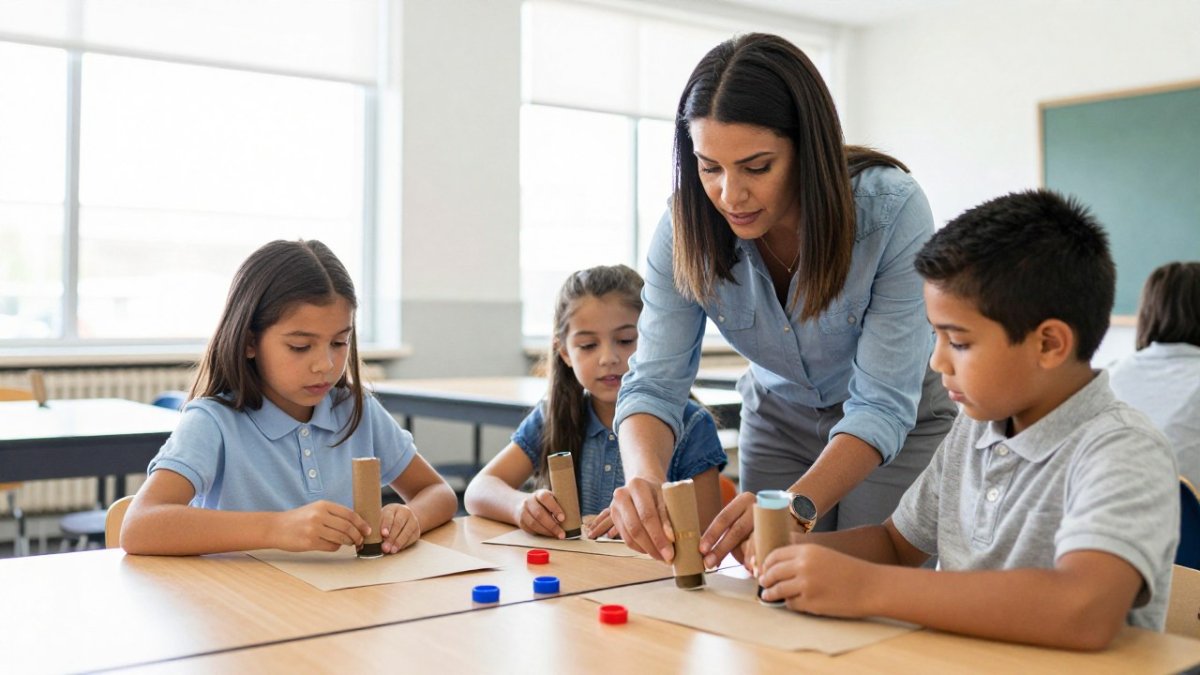
Recycled art projects for elementary students work best when the material list is short, the steps are numbered, and the task matches the grade band.
1. Plastic bottle transformations: self-watering planters [Time: 20 minutes | Grades 3-5]
- Cut a 2-liter bottle in half (teacher does the cutting)
- Punch holes in the cap
- Invert the top half into the bottom half
- Fill with soil and a seedling
Expected result: a working planter students take home.
Curriculum hook: tie to NGSS life-science standards on plant needs and water movement; students observe capillary action over two weeks.
2. Cardboard construction projects: tube towers [Time: 30 minutes | Grades 1-4]
- Collect toilet paper rolls and paper towel tubes
- Cut notches so tubes slot together
- Stack, tape, and decorate
Curriculum hook: connects to engineering-design standards on structure and stability; ask students to predict which base shape holds the most weight.
3. Magazine and paper collage: color mosaics [Time: 25 minutes | Grades K-3]
- Tear magazines into small pieces
- Sort by color into cups
- Glue onto cardboard outlines
Curriculum hook: supports fine-motor development and color-theory vocabulary; pairs with visual-arts standards on composition.
4. Egg carton sculpture: creatures [Time: 20 minutes | Grades K-2]
- Cut egg cartons into segments
- Add pipe cleaners for legs and antennae
- Paint and let dry
Curriculum hook: links to life-science standards on animal body parts and adaptation.
5. Found objects assemblage: junk robots [Time: 35 minutes | Grades 2-5]
- Bring in clean lids, buttons, and scrap wood
- Glue onto a cardboard base
- Name each robot and write its “job”
Curriculum hook: combines descriptive writing (the robot’s job description) with design thinking; a natural fit for ELA explanatory-writing standards.
6. Weaving with scrap fabric [Time: 30 minutes | Grades 3-5]
- Cut cardboard into loom frames
- String warp threads
- Weave strips of old fabric through
Curriculum hook: reinforces patterning and spatial reasoning; connects to social-studies units on textile traditions.
A bulk kit like our 1000-piece kids craft supplies kit covers the pipe cleaners, pom-poms, and glue these projects need, so you are not hunting for odds and ends the night before.
Plastic bottle transformations
Bottles are the most available material in most homes and the easiest to reshape. Beyond planters, students can cut bottles into scoops, pencil holders, or drip-catching bases for painting. Rinse and dry bottles a day ahead; wet plastic resists glue. Watch out: sharp cut edges on 2-liter bottles stay sharp after cutting, so run a strip of masking tape along every rim before students handle the halves.
Cardboard construction projects
Cardboard teaches structure faster than any other material. Start with tube towers, then move to box buildings with cut windows. A common mistake is letting students tape everything: teach slotting and notching first, and the constructions hold without adhesive. Watch out: corrugated cardboard from shipping boxes can carry dust and packing-tape residue, so shake it out and remove all tape before it enters the scrap bin.
Time needed for six recycled art projects
Eco-Friendly Craft Supplies for Kids: What to Buy and What to Skip
Eco-friendly craft supplies for kids fall into two groups: materials worth buying and materials you should collect for free. Spend on anything that touches skin or gets inhaled. Skip anything you can source from home.
Buy:
- Non-toxic, biodegradable glitter. Conventional plastic glitter never breaks down.
- Water-based, washable glue and paints labeled non-toxic
- Recycled paper and cardstock
Skip:
- Plastic glitter and foam sheets
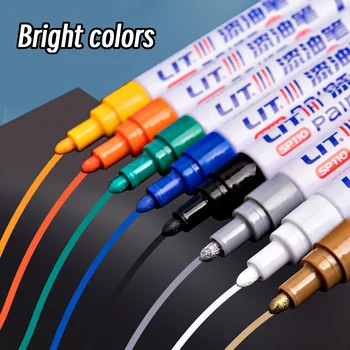
- Solvent-based markers
- Single-use kits with excess packaging
For a deeper verdict on whether the eco-labeled versions earn their higher cost, read are eco-friendly art supplies for kids worth it.
Reading the label: what “non-toxic” actually means
The word “non-toxic” on a craft bottle is not a marketing free-for-all. Look for labeling that indicates a product’s safety status, and read the container’s hazard warnings rather than relying on packaging claims alone.
Watch out: “Eco-friendly” and “non-toxic” are different claims. A product can be biodegradable and still contain a solvent that off-gasses during use, so read the hazard warnings, not just the recycling icon.
The materials that deserve the most scrutiny
Three supply categories cause the most trouble in elementary rooms, and each has a simple swap:
- Adhesives. Water-based white glue and glue sticks are the default for a reason: low odor, low fume, washable. Solvent-based contact cements and rubber cements belong in adult-only storage, if they belong in the room at all.
- Paints and markers. Water-based tempera and washable markers are the safe baseline. Permanent markers and oil-based paints should be teacher-applied or reserved for upper grades with ventilation. Check the container for a caution statement about inhalation before bulk-buying.
- Powders and glitter. Any airborne particulate, including glitter, chalk dust, and pigment powder, is an inhalation concern. Biodegradable glitter solves the environmental problem but not the dust problem, so apply it over a tray and keep it out of the air. Watch out: loose pigment powders marketed for craft use often carry inhalation warnings that buyers miss because the warning sits on the inner bag, not the outer box.
Found materials: the safety check before the craft check
Recycled and found materials carry their own risk profile, and this is where most guides go quiet. Before a collected item enters the scrap bin, run three questions: Was it food-safe and washed? Does it have a warning label or residue (pesticide, cleaning product, motor oil)? Is it small enough to be a choking hazard for the youngest grade in the room? A common pattern is to accept every donation in September and spend October sorting hazards out of the bin. Set the acceptance rule up front and share it with families.
Earth Day Craft Ideas and Nature-Based Art for Every Season
Earth Day craft ideas give sustainable art projects a natural anchor point each spring, but the best classrooms run nature-based art all year. Seasonal rhythm keeps materials fresh and ties art to science lessons.
- Fall: leaf rubbings, seed mosaics, acorn and twig sculpture
- Winter: pinecone bird feeders, paper snowflakes from scrap
- Spring: Earth Day collages from junk mail, seed paper
- Summer: sun prints with found objects, rock painting
For ready-to-run seasonal ideas built from household items, our guide to seasonal art projects kids can make from household items pairs well with this section. Nature-based art also gives you a free material supply: send students outside with a collection list before the lesson.
Material Safety and Toxicity: A Checklist for Teachers and Parents
Material safety is the gap most craft guides skip, and it matters more than any project idea. Run this checklist before any new supply enters the room:
- Container carries an AP (Approved Product) seal or “non-toxic” label
- No warning labels for inhalation or skin contact
- Glitter and powders are biodegradable and dust-controlled
- Adhesives are water-based and used with ventilation
- Scissors, awls, and cutters stay with the teacher
- Students wash hands after handling found objects
- Allergen check done on natural materials like seeds and wool
Read the container’s hazard warnings rather than relying on marketing claims. When in doubt, swap the material rather than risk it.
Cleanup and Storage Strategies for a Low-Waste Art Room
Cleanup and storage decide whether a low-waste art room survives past October. The system that works: sort by material, not by project.
- Label bins by material (bottle caps, tubes, fabric, paper scraps)
- Set a “scrap size” rule: pieces smaller than a coin go to recycling
- Assign student sorters as a classroom job
- Store flat materials upright in magazine files
- Keep a “use first” bin at the front for materials close to overflowing
A maker space runs on visible inventory. If students cannot see the bottle caps, they will not use them.
Choosing Sustainable Art Kits and Supplies for Your Classroom
Choosing kits comes down to three questions: is it complete, is it non-toxic, and does it survive real classroom use?
If you are stocking a full classroom, our guide to eco-friendly craft kits for children that actually hold up covers durability in detail. For the broader case against screen-heavy free time, see alternatives to screen time for elementary students.
| Kit Type | Best For | Watch For |
|---|---|---|
| Bulk supply kits | Full classrooms | Check piece counts |
| Themed subscription boxes | Single students | Ongoing cost |
| Scrap-based project guides | Tight budgets | Self-sourcing materials |
Best for: teachers who want one box per table.
Skip if: you already have a stocked scrap supply.
The real challenge is not finding project ideas. It is building a supply system that keeps sustainable art running all year without constant restocking.
Frequently Asked Questions
What are some easy recycled art projects for elementary students?
Start with projects that use materials you already have. Toilet paper rolls can become binoculars or small sculptures, plastic bottles can be cut into planters or flower stamps, and cardboard boxes can be turned into castles or marble runs. Egg cartons work well for paint mixing and small assemblage pieces. Keep a scrap bin for paper and fabric offcuts so students can collage freely without needing new supplies each time.
How can teachers incorporate sustainability into art lessons?
Build lessons around reuse rather than new materials. Ask families to donate clean cardboard, bottles, and paper rolls, then let students sort and store them in labeled bins. Pair each project with a short discussion about where the material would have gone otherwise. Tie projects to Earth Day or a classroom waste audit so students see the connection between their art and everyday habits.
Are eco-friendly craft supplies for kids really non-toxic?
Look for supplies labeled non-toxic and check for third-party certifications where available. Biodegradable glitters and plant-based glues are safer alternatives to conventional plastic-based products, but always read the label because terms like ‘natural’ are not regulated. Avoid solvent-based adhesives and any product without an ingredient list, especially for younger students who may put materials near their mouths.
What are the benefits of sustainable art education for young children?
Sustainable art education builds environmental awareness alongside creative skills. Students learn resourcefulness by working with found objects and scrap materials, practice problem-solving when a material does not behave as expected, and develop conservation habits that carry into other areas of life. It also reduces classroom supply costs and gives teachers a way to connect art to science and social studies lessons.




0 Comments