
Table of Contents
- The Real Cost of Entry: What You Pay Upfront
- Best Budget 3D Printers for Beginners
- The Cost of 3D Printing Filament and Consumables
- 3D Printer Maintenance Costs You Can’t Ignore
- Hidden Costs: Electricity, Software, and the Learning Tax
- Used vs. New: Which Makes More Financial Sense?
- Total Cost of Ownership: A Beginner’s Budgeting Framework
- Frequently Asked Questions
Last Updated: September 26, 2026
The Real Cost of Entry: What You Pay Upfront
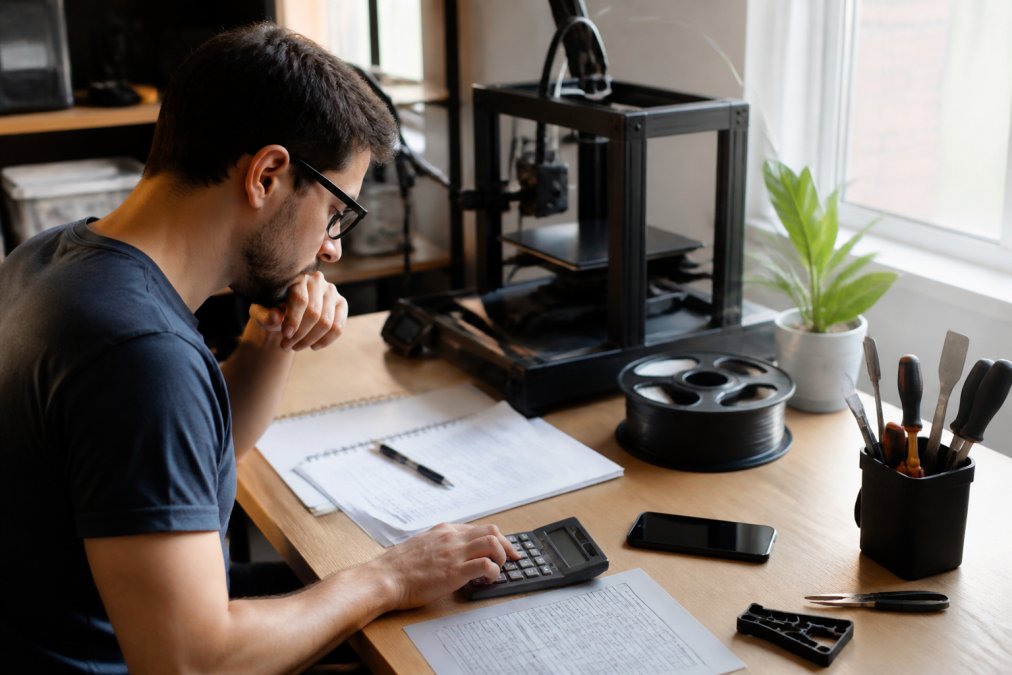
A beginner 3D printer has an upfront cost, which is why so many people wonder whether 3D printing expensive is really the whole story. That entry point is exactly why “is 3D printing expensive for beginners” has become such a common question. The printer is only the first line item. This guide from Craft Living Artistry breaks down the full financial picture, from filament to electricity to the mistakes that quietly drain your budget.
Here’s the number most buyers miss: the purchase price represents roughly half of what you’ll spend in your first year. The rest hides in consumables, replacement parts, and failed prints.
Budget FDM Printers vs. Resin Models
FDM printers melt plastic filament layer by layer. Resin printers cure liquid resin with light, producing finer detail but requiring more safety equipment and cleanup.
Entry-level FDM machines have an initial cost, while resin printers typically begin at a higher price point. Resin also adds recurring costs for isopropyl alcohol, nitrile gloves, and a curing station. For most beginners, FDM is often a more affordable starting point.
Best Budget 3D Printers for Beginners
The best budget 3D printers for beginners balance low upfront cost with reliable out-of-the-box performance. Three models consistently deliver that combination.
Bambu Lab A1 Mini is often considered an easy first printer. Automatic bed leveling and flow rate compensation mean you spend minutes on setup, not hours.
| Printer | Starting Price | Best For | Key Tradeoff |
|---|---|---|---|
| Bambu Lab A1 Mini | $249 | First-time buyers | Small build volume |
| Creality K1C | Contact for pricing | Advanced materials | Less polished software |
| Prusa MK4 | Contact for pricing | Open-source fans | Longer assembly time |
The Cost of 3D Printing Filament and Consumables
The cost of 3D printing filament is a recurring expense for most hobbyists. A typical small print uses 20 to 50 grams, so one spool covers dozens of projects.
PLA vs. PETG vs. Resin
PLA is the cheapest and easiest filament. It prints at low temperatures, sticks to the build plate well, and works for decorative pieces. It softens in hot cars, so skip it for functional parts.
Buying bargain filament from unknown sellers is the most common beginner mistake. Cheap spools often have inconsistent diameter, which causes jams, warping, and failed prints. Those failures waste both filament and time.
3D Printer Maintenance Costs You Can’t Ignore
3D printer maintenance costs are modest but predictable, typically a few dollars per month spread across replacement parts. Budget for them from day one rather than treating them as surprises.
Nozzles, Build Plates, and Spare Parts
A brass nozzle wears out after a few hundred hours of printing and costs a few dollars to replace. Abrasive filaments like carbon fiber speed up that wear significantly.
Other recurring items include:
- Nozzle replacements every few months of regular printing
- Build plate resurfacing or replacement
- PTFE tubing for the extruder path
- Belt tensioning tools and calibration prints
- Silicone socks for the hotend
Buy spare nozzles in packs of five. The shipping cost per unit drops sharply, and you’ll never lose a weekend to a clogged nozzle you can’t replace.
Hidden Costs: Electricity, Software, and the Learning Tax
Electricity consumption for a typical FDM printer is minor, but it is not zero. A standard entry-level FDM printer draws roughly 50 to 150 watts while printing, depending on the hotend and heated bed. A heated bed alone can pull 200 to 300 watts during warm-up. At an average residential rate, a 10-hour print on a machine averaging 100 watts costs a small amount.
Track your failed prints for the first month. Most beginners are shocked to find that 20 to 30 percent of their first month’s filament goes to prints that never finish or never work. Once you see the number, you can budget for it instead of being surprised by it.
Used vs. New: Which Makes More Financial Sense?
A used printer can cut your initial investment substantially, but only if you know what to inspect. Check the nozzle for wear, test the bed for warping, and ask how many hours the machine has run. Printers with heavy use often need immediate part replacements that erase the savings.
Total Cost of Ownership: A Beginner’s Budgeting Framework
Total cost of ownership is the full amount you’ll spend on a printer over a set period, including the machine, consumables, maintenance, and failed prints. Most beginners underestimate it by focusing only on the sticker price. The framework below moves beyond a simple checklist and gives you a structured way to calculate your actual cost per print and your first-year budget.
The Three-Layer TCO Model
Think of your costs in three layers:
Layer 1: Fixed costs (one-time)
- Printer: For entry-level FDM, for resin
- Initial tool kit: hex keys, flush cutters, tweezers, scraper
- Safety gear for resin: nitrile gloves, isopropyl alcohol, ventilation setup
- Optional: filament dry box, spare build plate, enclosure
Layer 2: Recurring costs (monthly)
- Filament or resin: one to two spools per month
- Spare parts: nozzles, PTFE tubing, build plate resurfacing
- Electricity: a few dollars per month
- Software: $0 if you stay in the free ecosystem, or a monthly cost if you add paid CAD
Layer 3: The learning tax (front-loaded)
- Failed prints: one to two spools of filament or 500 milliliters to a liter of resin
- Time: 10 to 20 hours of calibration and troubleshooting in the first month
Calculating Your Cost Per Print
Cost per print = (filament used in grams ÷ 1000) × spool price + (print time in hours × printer wattage ÷ 1000) × electricity rate + wear allowance
For a typical 30-gram PLA print on a 100-watt printer running 4 hours:
- Filament: (30 ÷ 1000) × spool price
- Electricity: (4 × 100 ÷ 1000) × electricity rate
- Wear allowance: roughly for nozzle and build plate degradation
- Total: a calculated cost per print
First-Year Budget Scenarios
Budget scenario (FDM, free software, minimal upgrades):
- Printer: Initial cost
- Filament: Estimated cost (one spool per month)
- Spare parts: Estimated cost
- Learning tax: Estimated cost
- Electricity: Estimated cost
- Total: an estimated total
Mid-range scenario (FDM, one paid CAD subscription, some upgrades):
- Printer: Initial cost
- Filament: Estimated cost (1.5 spools per month)
- Spare parts: Estimated cost
- Learning tax: Estimated cost
- Electricity: Estimated cost
- Software: Estimated cost
- Upgrades: Estimated cost
- Total: an estimated total
Resin scenario (resin printer, safety gear, curing station):
- Printer: Initial cost
- Resin: Estimated cost
- Safety gear and consumables: Estimated cost
- Spare parts (FEP film, vat): Estimated cost
- Learning tax: Estimated cost
- Electricity: Estimated cost
- Total: an estimated total
The Used Market Alternative
A used printer can cut your initial investment by 30 to 50 percent, but only if you know what to inspect. Check the nozzle for wear, test the bed for warping, and ask how many hours the machine has run. Printers with heavy use often need immediate part replacements that erase the savings. A used printer that needs several part replacements is not as inexpensive as its initial purchase price suggests.
The printer is a significant portion of your first-year cost. Budget the other portion for filament, parts, software, and the learning curve before you buy. Calculate your cost per print early; it is almost always lower than beginners fear and higher than the sticker price suggests.
Frequently Asked Questions
Is 3D printing difficult for beginners?
Modern entry-level printers like the Bambu Lab A1 Mini and Flashforge Adventurer 5M have automatic bed leveling and one-click printing, which removes most of the early frustration. The learning curve is now more about understanding slicer settings and material choices than assembling or tuning hardware. Expect a few failed prints while you learn, but most beginners produce usable objects within their first week.
How much does it cost to run a 3D printer for one hour?
Electricity is the smallest recurring cost. A typical FDM printer draws between 50 and 150 watts during a print, so one hour of printing costs just a few cents on average US residential rates. Filament consumption is the bigger variable: a small print might use 20 grams of PLA, while a larger functional part could use 100 grams or more.
What are the hidden costs of 3D printing?
Beyond the printer and filament, beginners often overlook nozzle replacements, build plate wear, isopropyl alcohol for resin cleanup, ventilation or an enclosure, and the ‘learning tax’ of failed prints that consume material without producing a usable object. Software is usually free with open-source slicers, but some brands push subscription cloud services that add up over time.
How much should a beginner spend on their first 3D printer?
A reliable entry-level FDM printer has an initial cost for basic models, while the Bambu Lab A1 Mini offers automatic calibration and faster speeds. Resin printers have a higher starting cost but require additional safety gear and post-processing supplies. Budget another 20 to 30 percent of the printer price for your first spool, spare nozzle, and basic tools.
Is 3D printing a cheap hobby compared to other maker crafts?
It can be affordable if you stick to PLA on a budget FDM printer and print small items. The upfront investment is moderate, and ongoing costs stay low when you avoid exotic filaments and unnecessary upgrades. Resin printing costs more per project because of safety gear, cleaning supplies, and higher material waste, but it delivers detail that FDM cannot match.
The real challenge isn’t affording a 3D printer. It’s budgeting for everything after the box arrives. Craft Living Artistry helps with that second part, offering curated 3D printing filament, maker tools, and craft kits in one place so you spend less time sourcing supplies and more time creating. Explore the collection and start your first project with materials you can trust.


0 Comments