
Last Updated: October 29, 2026
Quick Summary
Choosing beads for custom bridal jewelry starts with the wedding dress, then moves through style, bead material, size, color and comfort. Let the neckline and fabric guide the piece, and test every choice in the actual lighting and against the neckline before you string it.
- Start with the dress: a high neckline suits a bold statement piece, while a V or sweetheart neckline suits a delicate strand.
- Use 3-4 mm beads for delicate strands, 6-8 mm for most statement pieces, and 10 mm+ only for focal beads.
- Check colors near a window and under warm indoor light, since ivory pearls can look yellow indoors.
- Weigh the full strand, and keep large focal beads toward the front to protect the back of the neck.
- Wear the finished piece for at least an hour while moving to catch sharp edges, heavy spots and clasp snags.
Table of Contents
- Start With Your Dress: Matching Jewelry to a Wedding Dress
- Step 1: Define the Style and Wedding Theme
- Step 2: Choose Your Bead Material
- Step 3: Pick Bead Size for a Bridal Necklace
- Step 4: Select Color Under Different Lighting
- Step 5: Check Bead Compatibility, Comfort and Care
- Booking Your Custom Bridal Piece With Craft Living Artistry
- Frequently Asked Questions
Picking the right beads for a custom bridal necklace is harder than it looks. A bead that shines in the shop can look flat under the church lights, and a stone that feels fine on the table can scratch a bride’s neck by hour three.
Below, we walk through each decision step by step, with a summary table you can keep on your phone while you shop.
Start With Your Dress: Matching Jewelry to a Wedding Dress
Your dress should lead the jewelry choice, not the other way around. Most designers begin here because the dress is the largest, most visible element in every photo.
Reading Neckline and Silhouette
Look at the neckline first. A high, closed neckline like a mock or jewel neck leaves room for a bold statement piece. A sweetheart, V or off-the-shoulder neckline shows more skin, so a delicate strand or a drop pendant often sits better. A plunging neckline usually works with a short, lightweight piece that will not slide or swing.
Next, consider the silhouette. A structured ballgown can carry heavier beadwork, while a slim sheath or bias-cut gown usually looks best with fine, simple lines.
Coordinating Fabric, Color and Embellishments
Bring a swatch of the dress fabric when you shop. Lace, tulle and satin reflect light differently, so a bead that looks right on a plain stand may look wrong against beaded lace. If your dress has heavy embellishments, choose beads in a related tone or finish rather than matching every sparkle. A simple rule: let the dress carry the detail, and let the jewelry frame the face.
Step 1: Define the Style and Wedding Theme
Before you touch a single bead, decide on the overall look. Think about where and how you are getting married. A beach wedding favors lighter, airy pieces in pearl or soft stone. A formal evening ceremony can handle deeper colors and more weight.
Then name your style: classic, delicate or statement. Write one sentence that describes it, such as “soft, romantic and easy to wear all day.” That sentence will guide every choice that follows.
Step 2: Choose Your Bead Material
Bead material affects weight, sheen, durability and price more than anything else. Here is how to start.
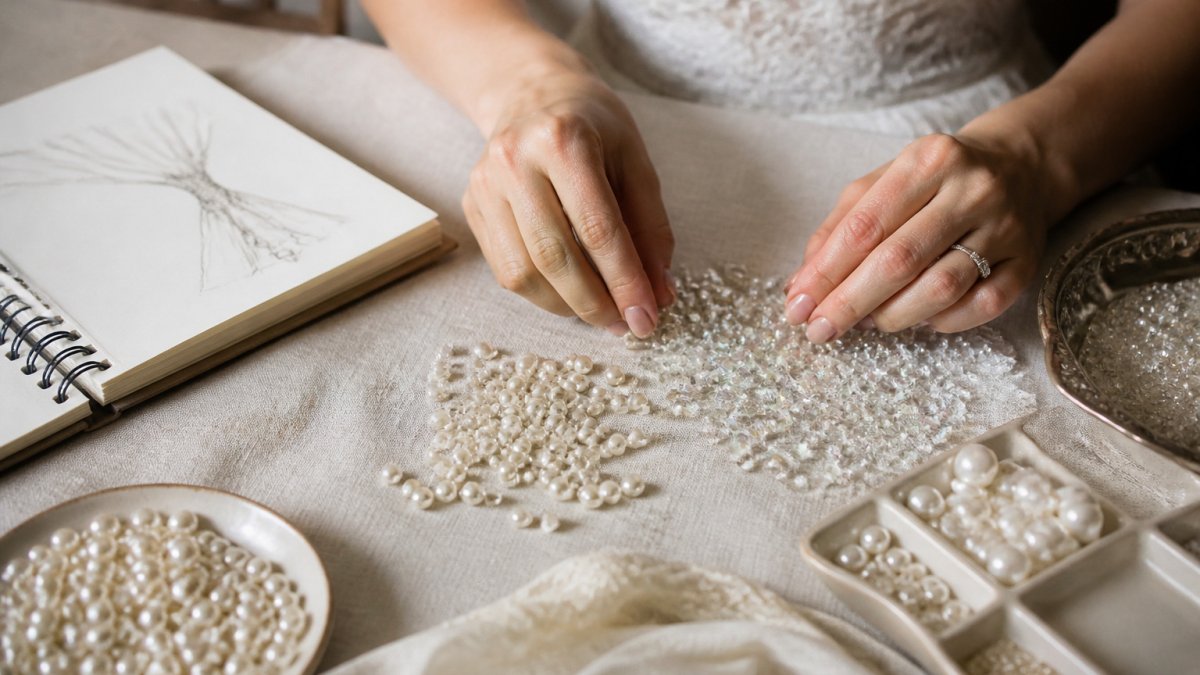
Pearl Beads for Wedding Jewelry
Look for even luster and round shape, and check that the surface has few blemishes. Imitation pearls, such as ABS round beads, give a similar look and weigh less than real pearls. Test the weight by holding a strand in your palm before you commit.
Crystal, Glass and Gemstone Options
Faceted crystal and glass beads add sparkle that catches light across a room. Gemstones, including agate, add natural color and texture.
Watch out: a stone that looks fine loose can chip once it is strung and worn, so pick a durable, well-finished bead over a fragile one even if the fragile bead looks prettier.
Step 3: Pick Bead Size for a Bridal Necklace
Most bridal jewelry guides stop at ‘small, medium, or large.’ For a custom piece, size is a bead-by-bead decision: the diameter, the shape, and the graduation pattern together determine how the necklace reads in photos and how it feels on the neck.
Start With a Size Map, Not a Single Size
Lay out the full strand plan before you buy beads. A practical starting map for an 18-inch necklace:
- 3-4 mm: Delicate strands, spacers, and the back half of a graduated necklace. Good for brides who want a fine, barely-there look.
- 6-8 mm: The workhorse range for most statement pieces and the front section of a graduated strand. Reads clearly in photos without overwhelming a slim neck.
- 10 mm and up: Focal beads only. Use one to three at the center, not a full strand, unless the bride specifically wants a bold collar effect.
A common pattern is a graduated strand that steps from 3-4 mm at the clasp to 8-10 mm at the center, with the size change spread over several beads rather than jumping abruptly. Abrupt jumps look intentional only when the design calls for a station or drop.
Shape Changes the Read
Diameter is only half the story. Round beads read classic and formal; faceted rounds catch light and look dressier; coin, oval, and teardrop beads create a focal point and can elongate the neckline; cube and square beads read modern and architectural. For a custom bridal piece, mix at most two shapes in one strand unless the design is deliberately eclectic. A single shape in a graduated size is the safest route to a timeless look.
Bead-by-Bead Selection for a Custom Design
For a custom piece, beads can be sorted by hand. Spread them on a beading tray in the order they will be strung, then check three things:
- Consistency: Are the beads in a strand close in size and color, or is there a visible outlier? Set outliers aside for earrings or a bracelet.
- Graduation: Does the size change smoothly from back to front, or does one bead jump out?
- Balance: Does the center bead sit at the visual center of the neckline, or does the strand look lopsided when held up?
Test Against the Neckline and the Dress
Hold the laid-out strand against the actual neckline, not a stand-in. A bead that looks right in a bowl can overwhelm a slim neck once worn, and a strand that looks balanced on a table can sit too high or too low against a specific neckline. If the bride is available, a mock-up of the strand can be worn with the dress or a similar top before stringing the final piece.
Photograph the laid-out strand next to the dress swatch and the neckline. The photo will reveal size and proportion problems that are easy to miss in person.
Match Size to the Rest of the Suite
Size should carry across the earrings, bracelet, and any hairpiece. If the necklace uses 8 mm center beads, earrings in the 6-8 mm range will look related without being identical. A bracelet can step down one size from the necklace. Keeping the size family consistent is what makes a custom suite look designed rather than assembled.
Step 4: Select Color Under Different Lighting
Color changes dramatically between a bridal suite, a garden and a reception hall. Bring your beads to a window with natural light, then check them under warm indoor lighting. Ivory pearls can look yellow under warm bulbs, and cool-toned crystals can look gray in shade.
Pick a color that stays consistent under both. If you cannot test in your venue’s lighting, choose a slightly warmer tone for indoor events and a brighter one for outdoor events.
Step 5: Check Bead Compatibility, Comfort and Care
A bead can be beautiful and still be the wrong bead if its hole, weight, or surface will not work with the rest of the design. Work through compatibility first, then comfort, then care.
Bead Hole Size and Stringing Materials
Match the stringing material to the bead weight and the piece’s flexibility:
- Beading wire (nylon-coated steel): Best for heavier gemstone and crystal strands that need to hold a shape. Choose a diameter that fills the hole without binding, and use crimp beads or crimp covers at the ends.
- Beading thread (nylon or silk): Better for knotted pearl strands and delicate pieces that should drape softly. Knot between beads if the piece will see heavy wear.
- Elastic cord: Convenient for bracelets but a poor choice for a bridal necklace that must hold its length through a long ceremony.
Bead Weight and Durability
Weigh the strand, not just the individual bead. A full 18-inch necklace of 10 mm glass or natural gemstone beads can feel noticeably heavier than the same length in 6 mm imitation pearls, and that weight concentrates at the back of the neck and on the clasp. If the design calls for large focal beads, place them toward the front and keep the back of the strand lighter.
Clasp Compatibility
Choose the clasp after the strand, not before. A heavy gemstone necklace needs a lobster claw or box clasp rated for the weight; a delicate pearl strand works better with a small fishhook or a pearl clasp that matches the piece. Check that the clasp’s opening is wide enough for the jump ring or end cap you plan to use, and that the clasp will not catch on hair, veil tulle, or dress fabric.
Comfort Testing Protocol
Before final approval, wear the finished piece for at least an hour, ideally while moving your head and shoulders as you would during a ceremony. Check for:
- Sharp edges or rough bead holes against the skin
- Heavy spots that pull the strand forward or dig into the collarbone
- A clasp that rotates, catches hair, or sits on a bone
- Tangling between the necklace and earrings or veil
If any of these appear, fix them at the prototype stage rather than after the final piece is strung.
Care and Post-Wedding Reuse
Store beaded pieces flat in a soft pouch or a compartmented box, away from humidity and direct sun. Pearls should be wiped with a soft, damp cloth after each wear and kept away from perfume, hairspray, and lotions. Gemstone strands can be wiped with a dry cloth; avoid ultrasonic cleaners on softer or treated stones. Have the strand restrung if the thread shows fraying or the knots loosen, and check the clasp before each wear.
Booking Your Custom Bridal Piece With Craft Living Artistry
If you have worked through these steps, explore the focused selection of jewelry-making essentials on the Craft Living Artistry site. For current product pricing and availability, please visit our website.
| Decision | What to Consider | Quick Tip |
|---|---|---|
| Dress neckline | High, V, sweetheart or plunging | Match piece length to neckline depth |
| Wedding theme | Beach, formal or traditional | Lighter pieces for outdoor events |
| Bead material | Pearl, crystal, glass or gemstone | Choose durable stones for long wear |
| Bead size | 3-4 mm, 6-8 mm or 10 mm+ | Test against the neckline before stringing |
| Color | Warm vs. cool tones | Check under both window and indoor light |
| Comfort and care | Weight, edges and clasp | Wear a test piece for one hour |
Frequently Asked Questions
How do I choose beads for custom bridal jewelry?
Start with three decisions: the style and theme of the wedding, the bead material, and the bead size. Decide whether the jewelry should be classic, delicate or a statement piece, then pick materials that suit that look and the setting, such as pearls for a traditional ceremony or lighter glass for a beach wedding. Next, choose sizes that balance the neckline and the bride’s frame. Work from the dress outward so every bead choice supports the overall look.
Which bead materials work best for bridal jewelry?
Pearls, crystal and glass beads, and colored gemstones such as morganite, emerald and ruby are options to consider. Pearls can suit traditional and classic styles. Crystal and glass add sparkle. Gemstones add color and a personal touch. Consider skin sensitivity if the jewelry will be worn for many hours.
How do I match bead colors to a wedding dress?
Compare beads against the dress fabric in natural daylight and again under the lighting of the venue, since ivory and champagne tones can shift under warm light. A small pop of color can echo an embellishment or a bouquet accent.
What bead size should I use for a bridal necklace?
Bead size should follow the neckline and the wearer’s build. Smaller beads of about 4 to 6 millimeters suit delicate, high-neck or minimalist dresses. Larger beads of 8 to 12 millimeters or more create a statement on open or V-neck gowns. Test the necklace draped over the dress at the fitting so the proportions look right when the bride is standing and moving.




0 Comments