
Table of Contents
- Where to Buy Reliable Pottery Tools Online
- Essential Pottery Tools for Beginners
- Professional Pottery Tool Brands Worth Your Investment
- How to Choose Pottery Trimming Tools That Last
- Starter Kits vs. Individual Tools: Which Should You Buy
- The Buy Once, Cry Once Approach to Pottery Tools
- Second-Hand and Thrifted Pottery Tool Sourcing
- Frequently Asked Questions
Last Updated: September 1, 2026
Where to Buy Reliable Pottery Tools Online
Finding where to buy reliable pottery tools can feel overwhelming when you’re starting out. The difference between a tool that lasts five years and one that falls apart after five projects often comes down to knowing where to source your supplies. Not all pottery tools are created equal. A flimsy wire clay cutter from a big-box craft store will frustrate you within weeks, while a precision carving tool from an established maker will become part of your studio for decades (peer-reviewed research). The difference is knowing which retailers curate their selections versus which ones just stock whatever’s cheapest.
Craft Living Artistry
Craft Living Artistry offers a thoughtfully curated selection of reliable pottery tools and supplies designed for both beginners and serious practitioners. Rather than overwhelming you with thousands of options, we focus on tools that deliver real results: polymer ribs that don’t crack, carving tools with replaceable blades, and starter kits assembled by potters who understand what actually matters. Whether you’re building a studio from scratch or upgrading specific tools, Craft Living Artistry stocks what works, with everything you need in one place.
Specialty Pottery Retailers
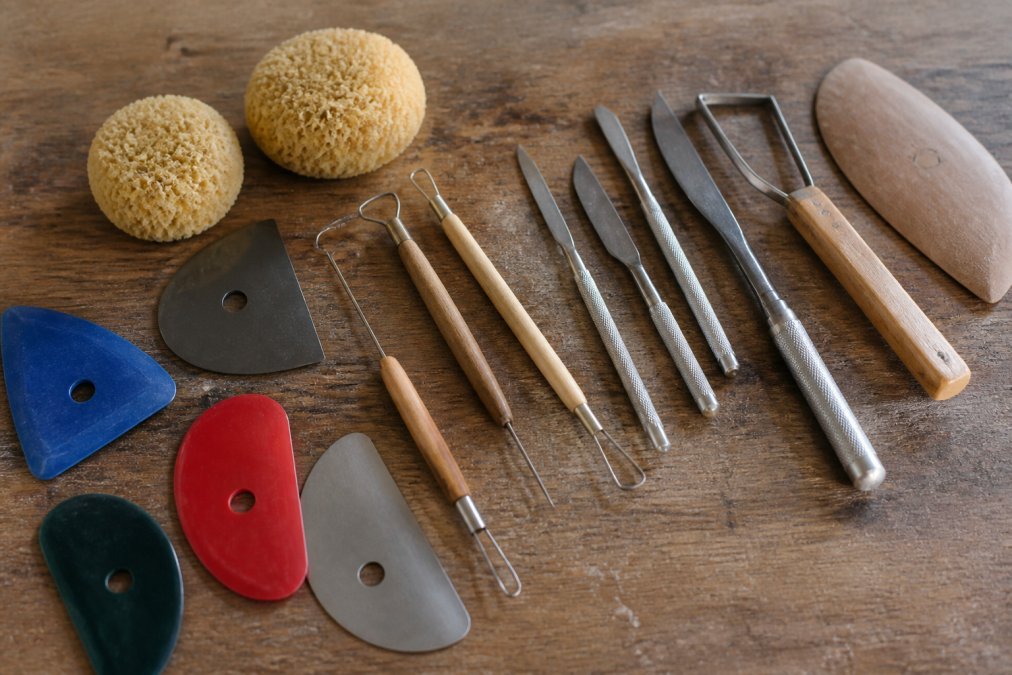
Specialty retailers like Mudtools, DiamondCore Tools, and Sheffield Pottery exist because they understand ceramics. Mudtools focuses exclusively on tools for wheel throwing and handbuilding, offering polymer ribs in multiple flexibilities (soft, medium, firm) and color-coded for easy identification. DiamondCore Tools specializes in precision carving tools with replaceable blades and handcrafted hardwood handles. Sheffield Pottery supplies high-quality clay bodies in bulk alongside tools, so you can source both materials and equipment from one trusted vendor.
These retailers offer better quality control than mass-market alternatives and are run by potters or people deeply embedded in the ceramics community. Prices are higher than big-box options, but you’re paying for durability and design tested in actual studios.
Direct-from-Maker Suppliers
Some of the best tools come directly from makers themselves. Hand + Fire creates handcrafted brass ribs from salvaged hardwood and hammered brass, developing a unique patina over time. Dolan Tools manufactures heavy-duty trimming tools with high-carbon knife steel blades and oil-sealed hardware handles designed to resist moisture damage.
Buying direct from makers gives you access to custom options, faster shipping, and the ability to ask specific questions about tool performance. You’re also supporting small businesses rather than middlemen.
Essential Pottery Tools for Beginners
Starting pottery without the right tools is like trying to paint without brushes. You need basic handbuilding and wheel throwing tools, plus texture and finishing tools to take your work from rough to refined. The good news: you don’t need dozens of tools. A focused selection covers 90% of what you’ll do in your first year.
Must-Have Handbuilding and Wheel Throwing Tools
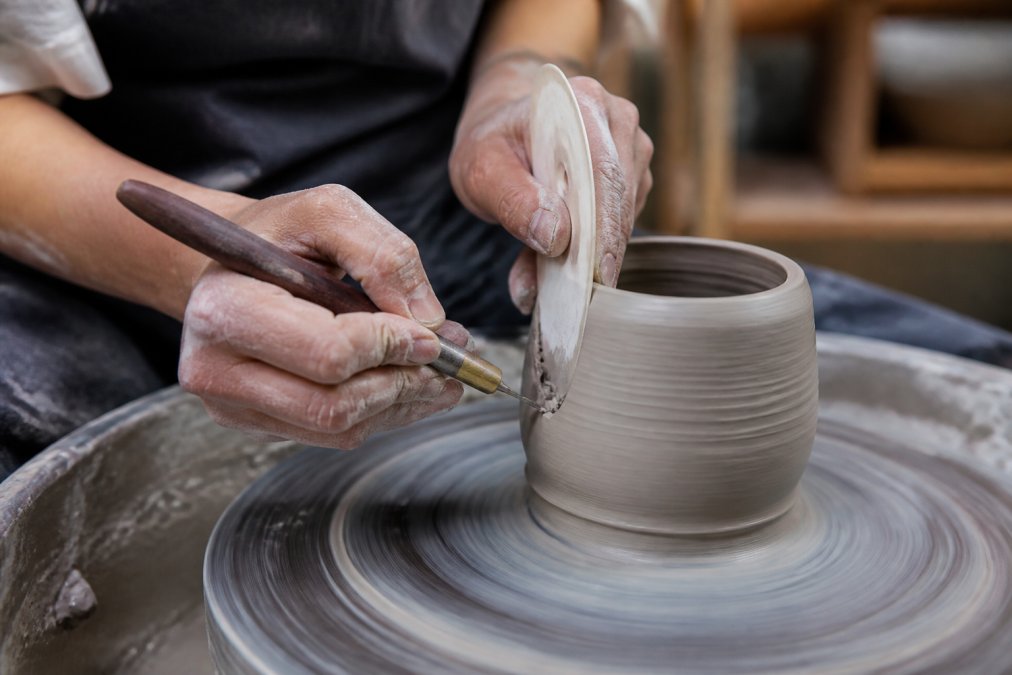
Every potter needs a polymer rib, it’s what you use to compress clay, smooth surfaces, and shape forms. Quality polymer ribs resist wear and maintain flexibility through hundreds of uses (the American Academy of Dermatology). Wire clay cutters cleanly separate clay from the wheel without dragging or tearing. A needle tool lets you carve, pierce, and detail with precision. A natural sea sponge smooths rims and cleans up rough edges.
For wheel throwers, throwing sticks help you trim and shape clay while spinning. For handbuilders, a good rib and basic carving tools form your foundation. The Mudtools Essentials Pottery Tool Kit bundles these essentials: polymer ribs, a needle tool, a stainless steel scraper rib, a Mudsponge, and a trimming tool, designed to cover fundamentals without forcing unnecessary purchases.
Texture, Carving, and Finishing Tools
Texture mats press patterns into clay slabs. Loop tools and ribbon tools create grooves and linear marks. Precision carving tools like the DiamondCore Tools P1 Curved V Tip cut fine details into leather-hard or bone-dry clay with replaceable blades that stay sharp longer.
Trimming tools with high-carbon steel blades remove excess clay cleanly and efficiently. A good trimming tool should feel balanced and hold an edge through dozens of pots. Xiem Tools Precision Applicators apply slip and underglazes with controlled lines for surface decoration.
Professional Pottery Tool Brands Worth Your Investment
When serious about pottery, specific brands consistently deliver durability and precision. These tools are designed by potters for potters, tested in real studios, and built to last.
Mudtools: Ergonomic Design and Durability
Mudtools has built a reputation on tools that feel good in your hand and perform reliably for years. Their polymer ribs are available in various flexibilities and shapes, each color-coded for quick identification. The polymer material resists wear better than rubber, and ergonomic design reduces hand fatigue during long throwing sessions.
DiamondCore Tools and Hand + Fire: Precision and Craftsmanship
DiamondCore Tools specializes in precision carving tools with replaceable blades. Their P1 Curved V Tip tool costs around $39 and delivers sharp, detailed carving. The replaceable blade system means you swap the blade when it dulls rather than discarding the entire tool. Hardwood handles are handcrafted and comfortable for extended use.
Hand + Fire represents the artisan end of the spectrum. Their brass kidney ribs are hammered from salvaged Oregon hardwood. These tools develop character over time and embody sustainability and handcrafted quality.
Dolan Tools: Heavy-Duty Trimming Excellence
Dolan Tools 300 Series trimming tools are built from high-carbon knife steel bonded to oil-sealed hardware handles. The seal prevents moisture from degrading the handle, critical in humid studios. These tools cost around $17.75 each and hold an edge through dozens of pots.
How to Choose Pottery Trimming Tools That Last
Trimming tools take abuse. Choosing the right tool means understanding what separates a tool that lasts five years from one that fails in five months.
Blade Material and Steel Quality
The blade is everything. High-carbon steel holds an edge longer than stainless steel, though it requires slightly more maintenance (nist.gov). Dolan Tools uses high-carbon knife steel, which is why their tools stay sharp longer. Look for tools where the blade is permanently bonded to the handle, not glued or riveted. DiamondCore Tools uses replaceable blades with permanent bonding, combining the sharpness advantage of replaceable systems with durability of permanent construction.
Handle Construction and Ergonomics
You hold the handle for hours. A poorly designed handle causes hand fatigue and cramping. Quality handles are shaped to fit your grip, made from materials that don’t slip when wet, and balanced so the tool doesn’t feel heavy.
Hardwood handles provide warmth and control. Oil-sealed handles resist moisture absorption, preventing swelling and warping. Test different handles before committing to a full set.
| Tool Type | Best Material | Durability | Care Required | Best For |
|---|---|---|---|---|
| Trimming tool | High-carbon steel | 3-5 years | Occasional honing | Serious throwers |
| Carving tool | High-carbon with replaceable blade | 5+ years | Blade replacement | Detail work |
| Rib | Polymer or brass | 2-4 years | Minimal | Wheel throwing |
| Wire cutter | Stainless steel | 2-3 years | Minimal | General use |
Starter Kits vs. Individual Tools: Which Should You Buy
The decision between a kit and individual tools depends on where you are in your pottery journey. Starter kits like the Mudtools Essentials Kit work well if you’re genuinely beginning. You get five essential tools selected by professionals at a price lower than buying individually. The downside: you might get a tool you don’t need.
Individual tools make sense once you know what you’re doing. After your first year, you’ll have strong preferences about rib flexibility and carving tool shapes. A practical approach: start with a kit if you’re brand new. After six months, assess what you actually use and build individual tools to fill gaps.
The Buy Once, Cry Once Approach to Pottery Tools
The phrase “buy once, cry once” means spending more upfront to avoid replacing cheap tools repeatedly. A five-dollar wire cutter from a mass-market craft store will frustrate you within weeks and need replacement in six months. A quality wire cutter costs three times as much but lasts three years. Over five years, you’ve spent less money and wasted zero time fighting with broken tools.
Reliable pottery tools from established makers cost more initially but deliver years of reliable performance. A $17.75 Dolan trimming tool isn’t luxury, it’s the baseline for professional-grade equipment. A $99 Mudtools kit isn’t expensive, it’s the cost of starting right.
Second-Hand and Thrifted Pottery Tool Sourcing
Budget constraints are real, and thrifted and second-hand tools offer a legitimate path to quality equipment at lower prices. Estate sales and pottery studio liquidations are goldmines where you’ll find vintage Mudtools and ribs with decades of life left. Look for tools with clear manufacturing marks, intact handles, and blades that haven’t been damaged.
Online marketplaces like Facebook Marketplace and Etsy sometimes have used pottery tools at reasonable prices. You can message sellers and ask about condition. A used Mudtools rib or Dolan trimming tool is still a quality tool at a discount.
Finding where to buy reliable pottery tools means understanding the difference between retailers who stock inventory and retailers who curate selections. Craft Living Artistry takes the curation approach, focusing on tools and kits that actually work, from brands like Mudtools, DiamondCore, and Dolan that are trusted by serious potters. Start with a quality kit or a few essential tools from a specialty retailer, invest in durability over price, and you’ll build a studio that serves your work for years.
Frequently Asked Questions
What are the essential pottery tools for beginners?
Beginners need ribs (for smoothing and shaping), needle tools (for detail work), wire clay cutters, a sponge, trimming tools, and loop tools. A starter kit like the Mudtools Essentials includes these core tools in one package. You’ll also want texture mats for surface detail and a basic throwing stick. These fundamentals cover handbuilding, wheel throwing, and finishing tasks without overwhelming investment.
Are expensive pottery tools worth the investment?
Yes, when you choose professional-grade tools made from durable materials like stainless steel and hardwood. Tools like Mudtools polymer ribs and Dolan Tools trimming tools cost more upfront but last for years and perform consistently. Cheap tools wear out quickly, slip in your hand, and frustrate your work. The ‘buy once, cry once’ philosophy applies here: investing in reliable pottery tools saves money and frustration over time.
Where can I buy professional-grade pottery trimming tools?
Professional-grade pottery trimming tools are available from Craft Living Artistry, specialty retailers like Mudtools and DiamondCore Tools, and pottery supply distributors. Look for tools with high-carbon steel blades, sealed hardwood handles, and proven durability. Dolan Tools 300 Series is a trusted option for serious potters. Check product reviews and material specifications before purchasing to ensure the tool matches your clay body and skill level.
Should I buy a pottery tool kit or individual tools?
Starter kits like Mudtools Essentials are ideal if you’re beginning pottery because they cover all fundamentals in one curated set. They’re cost-effective and eliminate guesswork about what to buy first. Once you develop preferences for specific tools or techniques, buy individual replacements or specialized tools. Experienced potters often mix kit tools with individual professional-grade pieces tailored to their studio work.
How do I know if a pottery tool is high quality?
Look for these markers: blades made from stainless steel or high-carbon knife steel, handles from oil-sealed hardwood or salvaged materials, ergonomic design that reduces hand fatigue, and durability ratings from established makers. Professional brands like Mudtools, DiamondCore, and Hand + Fire publish detailed material specifications. Read potter reviews on specialty sites, check warranty terms, and avoid tools with flimsy handles or dull blades that require frequent resharpening.
This article was written using GrandRanker





0 Comments