
Table of Contents
- Why Durable Tools Matter for Semi-Professional Potters
- Essential Handbuilding Tools for Ceramics
- Stainless Steel Pottery Trimming Tools That Last
- How to Maintain Ceramic Tools for Years of Use
- Wheel Throwing Tools and Bats Built for Heavy Use
- Budget vs. Investment: Building Your Durable Tool Kit
- Tool Ergonomics and Preventing Repetitive Strain
- Frequently Asked Questions
Last Updated: August 28, 2026
Why Durable Tools Matter for Semi-Professional Potters
When throwing 10-15 pieces weekly, tools become essential. A dull trimming tool fights you on every cut. A bat that warps mid-throw wastes clay and time. A rib that cracks means another supply store trip and unbudgeted expense.
At Craft Living Artistry, we understand that potters transition from casual hobbyists to semi-professionals who depend on tools for real creative output and sometimes income. Tool quality directly affects work quality. A worn-out loop tool leaves drag marks. A dull carving tool requires excessive pressure, leading to hand fatigue and repetitive strain (peer-reviewed research). A poorly designed rib forces an awkward grip that hurts after an hour.
This guide helps you understand which tools justify their cost, how to spot durability in materials and design, and how to maintain them for years of reliable use.
Essential Handbuilding Tools for Ceramics
Handbuilding demands precision because every mark stays visible. A dull carving tool tears clay instead of cutting cleanly. A modeling tool with an uncomfortable handle forces tension into your hands.
For semi-professional work, focus on tools with stainless steel carving heads and ergonomic handles. DiamondCore Tools clay carvers cut through leather-hard clay and refine bisqueware with clean lines. Ergonomic handles matter significantly, carving for 45 minutes with a poorly designed handle becomes a source of fatigue and strain.
Invest in a set covering multiple tasks: pointed tools for fine detail, flat blades for scraping and beveling, and loop tools for removing larger clay areas. This costs less than buying piecemeal and ensures you always have the right tool.
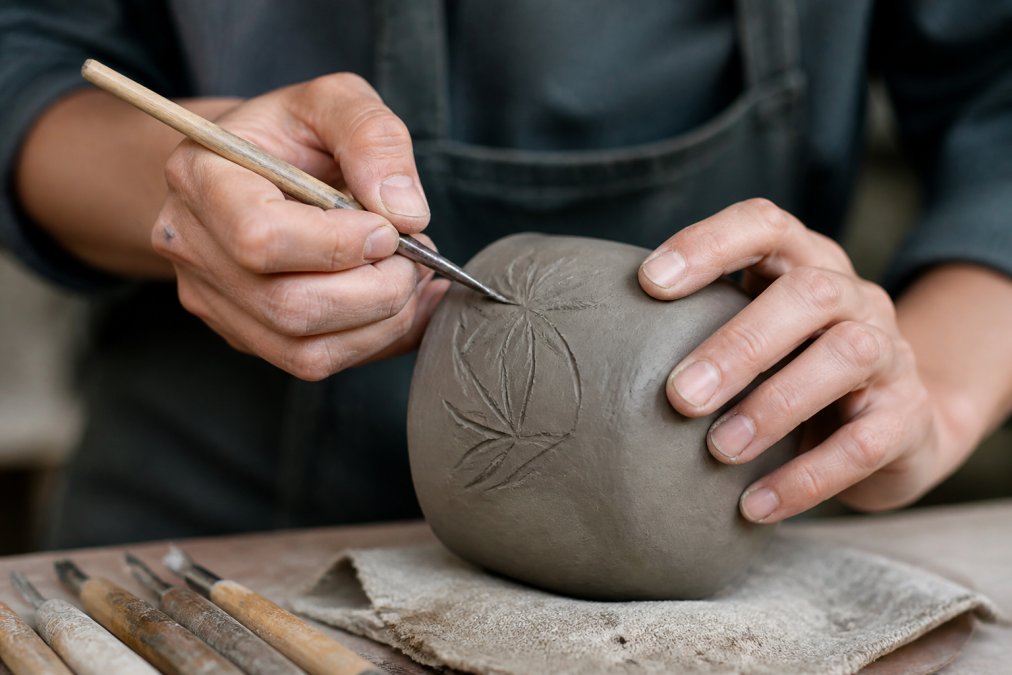
Clay Carving and Detail Work
Carving demands sharp tools. A sharp carving tool cuts cleanly; a dull one requires destabilizing pressure and leaves ragged edges. Stainless steel carving heads hold their edge longer and resist corrosion from clay dust and moisture.
The Xiem Mini Ribbon Tool Set offers multiple shapes in stainless steel with ergonomic handles designed for extended use. These tools excel at precision work: fine trimming, carving detail, and sculpting smaller forms. Stainless steel resists rust and maintains sharpness longer than softer metals. Handles distribute pressure across your hand rather than concentrating it in your fingers, preventing hand fatigue during extended work.
When carving leather-hard clay, let the tool do the work. Pressure should come from your arm and body weight, not from gripping harder. A sharp tool with proper technique prevents hand fatigue and repetitive strain injuries.
Shaping and Surface Finishing
Surface finishing separates amateur work from intentional pieces. Ribs and scrapers smooth clay, compress the surface, and create subtle texture. Mudtools Polymer Ribs are engineered from flexible polymer material that leaves a smooth finish without gouging.
Flexibility matters, a rigid metal rib can dig into soft clay and create unwanted texture. A flexible polymer rib conforms to the surface and creates even, controlled finishes. Quality ribs maintain their shape and flexibility through hundreds of uses, while cheaper polymer ribs become brittle or lose flex over time.
Stainless Steel Pottery Trimming Tools That Last
Trimming is where durable tools deliver obvious payoff. You’re removing clay from piece feet dozens of times per session. A dull trimming tool turns this into tedious frustration. A sharp one makes it quick and satisfying.
Stainless steel trimming tools hold their edge longer and resist corrosion. When trimming wet clay, moisture is constant. Stainless steel won’t rust or develop pitting that weakens cheaper tools. Handle design matters as much as the blade, a good handle distributes force across your palm and forearm, reducing strain and fatigue.
Loop Tools and Fettling Knives
Loop tools and fettling knives are trimming workhorses. A loop tool removes large amounts of clay efficiently. A fettling knife handles detail trimming and beveling. Both need to be sharp, responsive, and comfortable for extended periods.
Dolan Trimming Tools are highly recommended for their sharp, durable blades and comfortable wooden handles. Loop shapes cut cleanly without excessive pressure. Handles fit your hand naturally, reducing wrist strain during repetitive work.
A dull trimming tool causes repetitive strain injury. Excessive pressure to compensate for dullness forces your wrist and forearm into unnatural positions. After weeks, you develop tendonitis or carpal tunnel symptoms. Sharp tools prevent this by requiring minimal pressure.
Why Material Quality Determines Longevity
The difference between a tool lasting five years and one lasting twenty comes down to material. Stainless steel resists corrosion and maintains hardness. Hardwood handles properly sealed won’t absorb moisture or split. Ergonomic design distributes force so tools don’t fail prematurely.
Cheaper tools use softer metals that dull quickly or lower-grade stainless. They use uncomfortable handles prone to splitting. The investment in quality pays off through reduced replacement costs, fewer interrupted sessions, and less physical strain.
How to Maintain Ceramic Tools for Years of Use
Most potters buy good tools then let them deteriorate through neglect. A properly maintained tool stays sharp and responsive for years. One ignored becomes dull, corroded, and uncomfortable within months.
The maintenance routine is straightforward: clean tools after every session, dry them completely, store them in a dry place, and sharpen them regularly. This takes 10 minutes per week and extends tool life dramatically.
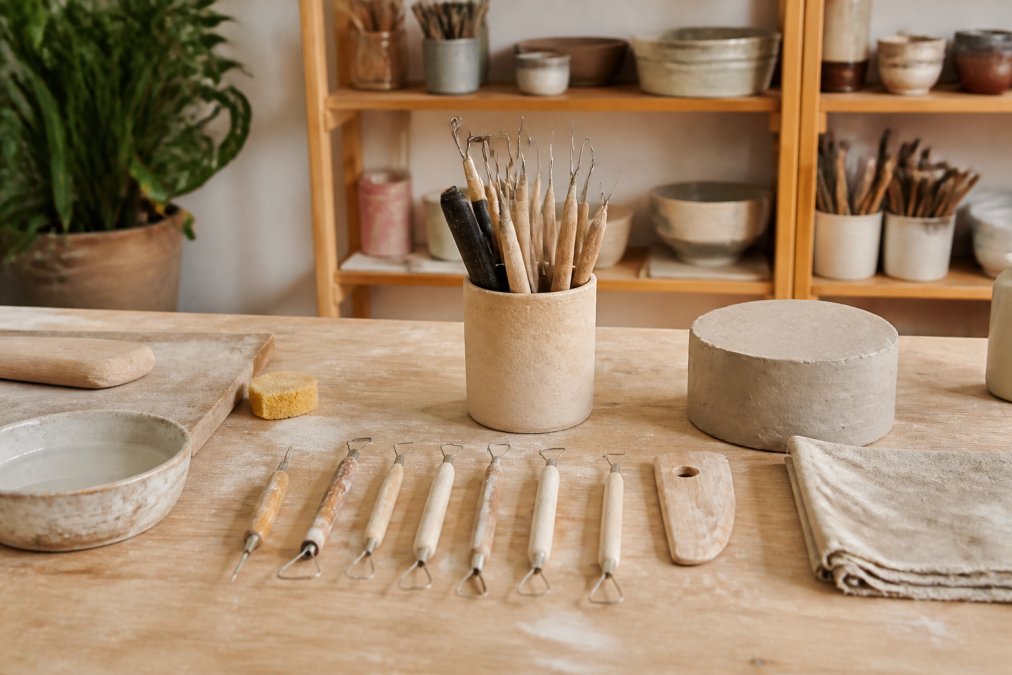
Cleaning and Storage Best Practices
Clay dust and moisture damage tools. Wet clay particles left on a tool dry and harden, making it uncomfortable and potentially damaging the blade. Moisture causes rust and corrosion, even on stainless steel if left for weeks.
Clean tools immediately after use. Rinse under water and dry with a cloth. For wooden handles, ensure complete drying. Store tools in a dry location where they won’t be jostled or bent. A tool rack or magnetic strip keeps them organized while protecting blades.
For stainless steel tools, occasional light oiling prevents corrosion and keeps blades moving smoothly. A thin coat of food-grade mineral oil on handles keeps wood from drying out and cracking. This takes two minutes monthly and dramatically extends tool life.
Sharpening and Tool Maintenance Schedules
Sharpening frequency depends on usage. A semi-professional potter throwing several times weekly should sharpen trimming tools every 4-6 weeks (peer-reviewed research). Carving tools used less frequently can go 8-12 weeks.
Sharpening method depends on the tool. Loop tools and fettling knives sharpen with a honing stone or ceramic sharpener. Carving tools benefit from a fine whetstone. Maintain the original bevel angle to preserve performance.
Many potters develop basic sharpening skills rather than sending tools out professionally. A good honing stone investment pays for itself quickly, and you’ll always have sharp tools available.
A tool maintenance schedule takes 15 minutes per week and extends tool life by 3-5 years compared to neglected tools ([peer-reviewed research](https://pmc.ncbi.nlm.nih.gov/articles/PMC7104814/)). That’s significant return on minimal time investment.
Wheel Throwing Tools and Bats Built for Heavy Use
When throwing regularly, bats take a beating. They’re compressed, twisted, and subjected to repeated impact as you cut pieces off. A warping or cracking bat wastes clay and frustrates workflow. The right bat choice depends on your throwing style and production volume.
Three main bat materials exist: plastic, hardboard, and Medex, each with different durability characteristics for semi-professional work.
Plastic vs. Medex Bats: Durability Comparison
Speedball Plastic Bats are injection-molded from high-impact plastic that resists warping, chipping, and shrinking. They won’t absorb water, so you can throw immediately after cleaning. Universal pin spacing fits most wheels.
StudioPro Medex Bats offer a different approach. Medex is rigid, engineered wood that’s more absorbent than plastic but less than plaster. It won’t warp or chip like traditional hardboard. Absorbency helps pieces firm up on the bat, making removal easier without wiring.
For semi-professional potters throwing regularly, Medex bats often work better because they combine durability with the practical advantage of absorbency.
Ribs and Scrapers for Consistent Results
Ribs and scrapers finish wheel throwing. They shape walls, smooth surfaces, and compress rims. Your rib quality directly affects finished piece quality. A worn or uncomfortable rib forces poor technique, which shows in final work.
Mudtools Polymer Ribs are the standard recommendation for durability, comfort, and smooth finishes without gouging. Different rib shapes suit different surfaces: rounded ribs for general smoothing, angled ribs for compressing rims, and curved ribs for interiors. Quality ribs maintain flex and surface finish through hundreds of uses.
Budget vs. Investment: Building Your Durable Tool Kit
Every semi-professional potter faces the question of how much to spend on tools. The answer depends on production volume and whether you generate income from your work.
Cheap tools have hidden costs: replacement, frustration, and physical strain. A tool costing 40% less but breaking in half the time isn’t actually cheaper. Cost per use matters. A $40 tool lasting two years costs less per use than a $15 tool lasting three months.
Which Tools Justify Higher Investment
Trimming tools and carving tools justify higher investment because you use them frequently and they directly affect work quality. A dull trimming tool isn’t just annoying, it creates physical strain and compromises pieces.
Ribs and scrapers justify investment because you use them on every thrown piece. A rib that’s uncomfortable or wears quickly forces poor technique.
Bats are worth investing in because they’re the wheel throwing foundation. A warping or cracking bat wastes clay and time.
Avoiding False Economy in Tool Selection
For semi-professional potters, Craft Living Artistry offers curated durable tools and materials supporting hobbyist and professional work. Rather than sorting endless options, you get tools selected for quality and durability, everything needed to set up a capable studio in one place.
Invest in core tools you’ll use daily, trimming tools, carving tools, ribs, and build outward. Don’t buy specialty tools you might use someday. Buy essentials in high quality, use them regularly, and add to your collection as your work evolves.
Tool Ergonomics and Preventing Repetitive Strain
Repetitive strain injuries are common among potters because work involves the same motions dozens of times per session. Trimming, carving, and throwing all stress wrists, forearms, and shoulders. Tool design directly impacts whether you develop pain or stay healthy.
The primary issue is grip and pressure. Uncomfortable tools or those requiring excessive force cause compensation through harder gripping or poor technique. Over weeks, this leads to tendonitis, carpal tunnel syndrome, or shoulder strain, potentially sidelining you for months.
Ergonomic tool handles distribute pressure across your hand and forearm rather than concentrating it in your fingers. Tools from Dolan and Mudtools prioritize this because comfort directly affects work quality and long-term health. Tool sharpness also affects ergonomics, sharp tools require minimal pressure, meaning less strain. Maintaining sharp tools prevents injury as much as it ensures work quality.
Building a durable tool collection for semi-professional pottery is an investment in both work quality and physical health. The tools you choose determine how much you enjoy the process and how long you can sustain work without injury. Quality matters more at this level than for casual hobbyists.
Craft Living Artistry understands semi-professional potter needs. We’ve curated focused pottery tools, clay materials, and studio equipment specifically designed for durability and consistent results. Rather than sorting overwhelming options, you get access to tools supporting real work at every skill level. Explore our pottery tools collection and find everything needed to set up a capable, professional-grade home studio.
| Tool Type | Best For | Durability Focus | Maintenance |
|---|---|---|---|
| Stainless Steel Trimming Tools | Regular trimming and beveling | Sharp blade, comfortable handle | Sharpen every 4-6 weeks |
| Clay Carving Tools | Detail work and refining | Stainless steel heads, ergonomic handles | Sharpen every 8-12 weeks |
| Polymer Ribs | Wheel throwing surface work | Flexible polymer material | Clean after each use |
| Medex Bats | Wheel throwing | Rigid, absorbent material | Dry completely after use |
| Plastic Bats | Wheel throwing (non-absorbent preference) | High-impact plastic | Clean and dry after use |
| Loop Tools | Trimming large clay areas | Durable blade material | Sharpen regularly |
Frequently Asked Questions
Q: What materials make durable pottery tools last longer?
A: Stainless steel blades resist rust and maintain sharpness far longer than carbon steel. Hardwood handles absorb shock and reduce hand fatigue during extended work. Polymer ribs and flexible tools offer durability without brittleness. Tools made from these materials withstand hundreds of hours of studio use without degradation, making them worth the initial investment for semi-professional work.
Q: How often should I sharpen or replace my ceramic trimming tools?
A: Frequency depends on clay body and usage intensity. Stoneware dulls tools faster than earthenware. Inspect your trimming tools weekly, if they no longer cut cleanly through leather-hard clay, it’s time to sharpen. Most potters sharpen loop tools monthly with a fine whetstone. Replace tools only when damage is irreparable. Proper maintenance extends tool life by years.
Q: Are diamond core carving tools worth the investment for semi-professional potters?
A: Yes, if you do intricate detail work regularly. Diamond core tools hold their sharpness longer than standard carving tools and provide exceptional control on leather-hard and bisqueware. For functional potters doing minimal carving, standard stainless steel tools suffice.
Q: What’s the difference between plastic and Medex bats for wheel throwing?
A: Plastic bats are rigid, non-absorbent, and never warp, ideal for high-volume production. Medex bats absorb moisture slightly, helping pots release naturally as they dry, and offer more rigidity than traditional hardboard. Choose plastic for speed and consistency; choose Medex if you prefer natural drying release. Both last years with proper care and are significantly more durable than plaster.
This article was written using GrandRanker


0 Comments