Table of Contents
- The Hidden Time Cost of DIY Crafting
- Why Curated Craft Kits Save Time: A Time-Audit Breakdown
- How to Choose a DIY Craft Kit That Fits Your Project
- Best Kids Craft Kits for Creativity and Skill-Building
- Benefits of Craft Subscription Boxes for Ongoing Projects
- Reducing Material Waste and Project Frustration
- Frequently Asked Questions
Last Updated: September 11, 2026
The Hidden Time Cost of DIY Crafting
The average crafter loses hours before the first stitch is even made. It’s not the creative work that drains your evening, it’s the logistics surrounding it. This guide from Craft Living Artistry breaks down exactly where those hours disappear, and why curated craft kits save time by eliminating the invisible labor of sourcing, planning, and second-guessing every purchase. If you’ve ever finished a project and wondered where the night went, the answer isn’t your skill level. It’s the hidden supply chain you ran yourself.
Where Your Hours Actually Go
Most people assume a DIY project takes as long as the instructions say. In practice, the instructions only cover the fun part. The real timeline includes researching materials, comparing prices across multiple shops, driving to pick up a single missing item, and returning the wrong shade of thread. That overhead is the reason so many promising projects stall on a shelf halfway done.
Why Curated Craft Kits Save Time: A Time-Audit Breakdown
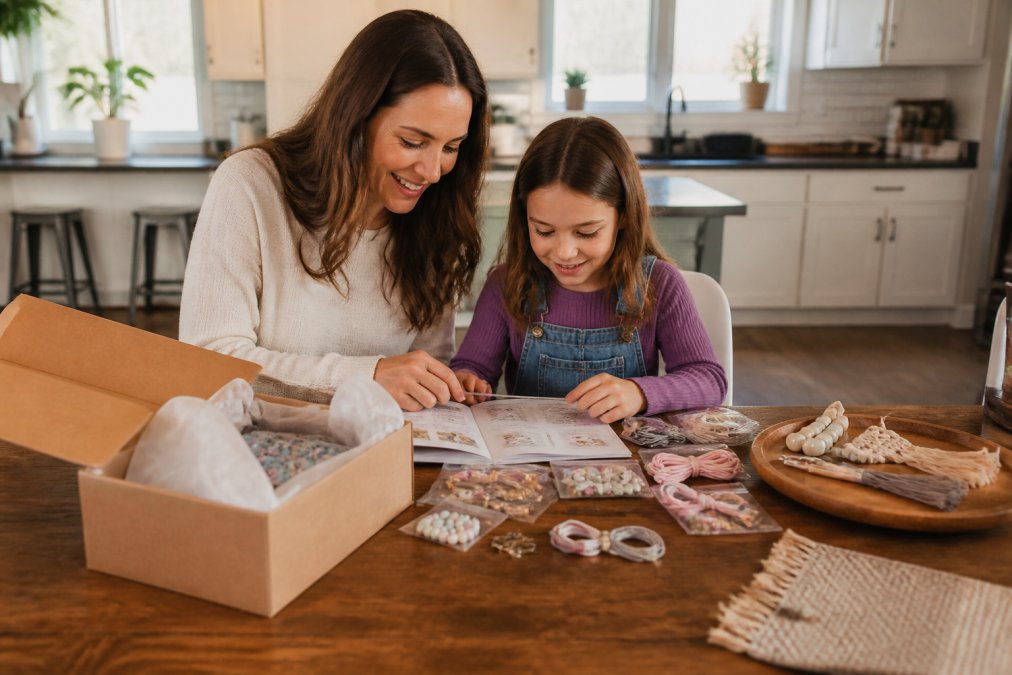
Curated craft kits save time because they collapse a multi-step supply chain into a single purchase. Instead of researching, sourcing, and verifying materials separately, you open one box and start creating. The time savings aren’t a marketing claim, they’re arithmetic. Below is a side-by-side audit of where the hours actually go on a typical weekend project, say, a beaded bracelet with a clasp and a small embroidered accent.
The Self-Sourced Timeline
Most hobbyists underestimate the front-end work because it’s spread across several days and never feels like ‘the project.’ A common pattern looks like this:
- Research and inspiration (30-60 minutes): scrolling tutorials, saving pins, reading reviews to figure out which bead size, thread weight, or fabric actually works.
- Supply-list building (15-30 minutes): translating a tutorial into a shopping list, then cross-checking what’s already in your stash.
- Store run or online order (45-90 minutes): one trip to a craft retailer, or 20-40 minutes of cart-building online plus shipping wait time.
- Substitution and returns (20-60 minutes): the dye lot is off, the clasp is the wrong gauge, the interfacing is out of stock, so you re-order or drive back.
- Setup and prep (15-30 minutes): measuring, cutting, pre-washing, sorting, and organizing materials before the first stitch.
Add it up and the pre-craft overhead alone commonly runs 2 to 4.5 hours before any creative work begins (peer-reviewed research). That’s the hidden supply chain you ran yourself.
The Curated-Kit Timeline
A curated kit compresses those same steps into a single decision:
- Choose the kit (5-10 minutes): one product page, one skill level, one project scope.
- Unbox and inventory (5-10 minutes): check the included list against the contents, lay everything out.
- Start crafting (0 minutes of prep): materials arrive pre-measured, pre-matched, and pre-cut to the project.
Total front-end time: 10 to 20 minutes. The delta is roughly 2 to 4 hours per project, and that’s before you count the second trip to the store when something runs short.
Sourcing, Planning, and the Store Run
A common mistake is underestimating the planning phase. Many hobbyists spend more time deciding what to buy than actually making the project. A single craft store run typically involves a list, a drive, and at least one item that’s out of stock. Curated kits remove that entire loop. The materials arrive chosen, measured, and matched.
There’s also a compounding effect: self-sourcing rarely ends with one trip. Industry surveys of hobbyists routinely find that a majority of DIY projects require at least one follow-up purchase, which resets the clock on the entire overhead cycle (statista.com). A kit that ships complete eliminates the follow-up by design.
Decision Fatigue and the Mental Load
The mental load is the part nobody talks about. Choosing between forty shades of the same bead color sounds trivial until you’ve done it for an hour. Decision fatigue quietly erodes the creative enjoyment that drew you to the hobby in the first place. An all-in-one package replaces dozens of small choices with one confident decision.
Researchers who study consumer choice have long observed that each additional option adds cognitive cost, even when the options are similar (apa.org). In a craft context, that cost shows up as abandoned carts, half-finished projects, and the nagging sense that you bought the wrong thing. A curated kit is a done-for-you decision: the selection work has already been done by someone who knows the project end to end.
Curated kits don’t just save minutes at the store. They protect the mental energy you need for the actual creative work, and the audit shows the savings are measured in hours, not minutes.
How to Choose a DIY Craft Kit That Fits Your Project
The best DIY craft kit matches your skill level, your project scope, and your available time. Start by identifying what the kit includes versus what you already own. A well-designed kit for beginners should require nothing beyond what’s in the box.
Use this quick evaluation table before you buy:
| What to Check | Why It Matters | Red Flag |
|---|---|---|
| Complete material list | Prevents mid-project store runs | Vague “and more” wording |
| Skill level stated | Avoids frustration for beginners | No level indicated |
| Instructions included | Supports step-by-step progress | “Sold separately” notes |
| Project finish time | Helps you plan realistically | No time estimate |
| Reusability of tools | Affects long-term value | Single-use only tools |
Check whether the kit’s tools are reusable across future projects. A kit that leaves you with a quality tool you’ll use again delivers more value than one that’s purely consumable.
Best Kids Craft Kits for Creativity and Skill-Building
The best kids craft kits for creativity balance open-ended making with enough structure to prevent frustration. Young crafters thrive when the materials are prepared but the outcome isn’t rigidly prescribed. Skill-building happens when a child can focus on technique instead of hunting for supplies.
Look for kits that:
- Include age-appropriate tools with safe edges
- Offer multiple project variations from one box
- Provide illustrated, step-by-step instructions
- Encourage personalization rather than a single correct result
A frequent pitfall with kids’ kits is missing pieces. Before starting, do a quick inventory against the included list. Discovering a missing item mid-project is the fastest way to lose a child’s attention.
Benefits of Craft Subscription Boxes for Ongoing Projects
Craft subscription boxes solve the hobby maintenance problem. Instead of restocking supplies reactively, a subscription delivers a steady rhythm of projects and materials. For hobbyists juggling multiple interests, this reduces the decision fatigue of choosing what to make next.
Many families find that a subscription model also improves project completion rate. When materials arrive together and on schedule, there’s less chance a project stalls waiting for one forgotten item. The all-in-one package format keeps momentum going month to month.
Crafters who want a steady creative outlet without planning every project from scratch.
Reducing Material Waste and Project Frustration
Material waste is the quiet cost of self-sourcing, and it’s a time cost as much as a money cost. When you buy full skeins, sheets, or spools for a small project, the leftovers don’t just sit there; they demand management. You sort them, bag them, label them, store them, and eventually dig through them looking for a match that may or may not exist. That’s the leftover-material tax, and it compounds every time you start a new project.
The Waste-to-Time Conversion
Consider what a single partial skein of yarn or a half-sheet of felt actually costs you in time:
- Sorting and storage (5-15 minutes per project): deciding whether to keep, toss, or donate the remainder.
- Stash retrieval (10-30 minutes per future project): hunting through bins for a color or weight you think you have.
- Mismatch correction (20-60 minutes): discovering the leftover isn’t enough, isn’t the right dye lot, or isn’t the right weight, and re-sourcing mid-project.
- Clutter management (ongoing): the mental overhead of a craft space that’s never quite organized.
Curated kits portion materials to the project. There’s no remainder to sort, no stash to search, and no mid-project mismatch. The waste reduction isn’t just environmental, it’s a direct subtraction from your project timeline.
Why Frustration Stalls Projects
Project frustration usually traces back to the same root cause: an incomplete or mismatched supply set. A kit that’s been assembled with the finished project in mind eliminates the guesswork. You spend your time making, not troubleshooting why a material won’t behave.
The mechanism matters here. Frustration in DIY rarely comes from the craft itself, it comes from the gap between what the instructions assume and what you actually have on hand. A pattern calls for a size 7 needle; you have a size 8. A tutorial uses a specific adhesive; yours dries cloudy. Each mismatch is small, but each one forces a pause, a search, and a decision. Those pauses are where momentum dies.
A frequent pitfall is assuming ‘close enough’ materials will work. In practice, substitutions often produce a finished piece that looks off, which then triggers a re-do, the single most expensive outcome in time terms.
The Completion-Rate Effect
When materials arrive together and complete, projects finish. When they don’t, projects stall on a shelf waiting for one forgotten item. That’s the completion-rate effect, and it’s why curated kits tend to produce finished pieces rather than half-finished intentions. The time you save isn’t just the sourcing hours, it’s the hours you don’t lose to abandoned projects that never delivered the creative payoff you were after.
Before buying any kit, check whether the materials are pre-measured to the project or sold in standard retail quantities. Pre-measured kits eliminate the leftover-management step entirely; standard-quantity kits shift it back onto you.
Frequently Asked Questions
What are the primary benefits of using curated craft kits?
Curated craft kits cut the time you spend sourcing supplies, planning steps, and making decisions. Everything needed arrives in one package with step-by-step instructions, so you move straight into creative flow. They also reduce material waste and project frustration because the kit designer has already matched quantities and tools to the project. For beginners, this lowers the barrier to starting a new hobby; for experienced makers, it means fewer store runs and more time actually crafting.
How do craft kits help beginners save time on research?
A beginner typically spends hours watching tutorials, comparing supply lists, and second-guessing tool choices before a single cut is made. A curated kit replaces that research phase with a tested materials list and instructions written for that specific project. You skip the trial-and-error of buying the wrong bead size or incompatible filament. The time saved on research goes directly into skill development and finishing your first project, which builds momentum to keep going.
Are curated craft kits more cost-effective than buying individual supplies?
Often, yes, but it depends on the project. When you buy individual supplies, you frequently purchase full packs of items you only need a small amount of, and leftover material becomes waste. A curated kit includes measured quantities, so you pay for what the project uses. The cost-benefit analysis also includes your time: fewer shopping trips and less decision fatigue have real value. For one-off projects or new hobbies, kits usually win on total cost.
What should you look for in a high-quality curated craft kit?
Check three things: completeness, material quality, and instruction clarity. A complete kit lists every item and includes the tools, not just the consumables. Material quality matters most for pottery, jewelry, and 3D printing, where poor clay, weak cord, or inconsistent filament ruins a project. Instructions should be step-by-step with photos or diagrams. Also look for a return policy that covers defective or incompatible materials, and confirm the kit matches your skill level before buying.




0 Comments