
Table of Contents
- Why Craft Kits Go Unfinished
- Evaluate Before You Buy: Pre-Purchase Criteria
- How to Verify Craft Kit Contents Before Purchase
- Best Kids Craft Kits for Creativity and Completion
- What to Do If a Craft Kit Is Missing Parts
- Build Habits to Finish What You Start
- Frequently Asked Questions
Last Updated: August 26, 2026
Why Craft Kits Go Unfinished
Craft kits sit unopened in closets across thousands of homes due to mismatched skill levels, unrealistic time expectations, missing supplies, and waning interest. The problem often starts before you open the box. A careful evaluation at purchase can prevent weeks of guilt and wasted money.
Buyers approach craft kits like impulse purchases: minimal research, maximum optimism. You see a beautiful finished project, imagine yourself completing it, and buy. You don’t ask whether the kit matches your skill level, available time, or includes all promised supplies. This guide from Craft Living Artistry breaks down how to avoid incomplete kits by making smarter purchasing decisions upfront and following through once you start.
The stakes compound: one wasted kit costs money; multiple abandoned projects cost money plus motivation. Over time, they erode confidence in creative pursuits. The good news: most of this is preventable.
Evaluate Before You Buy: Pre-Purchase Criteria
Before checkout, ask three hard questions: Does this kit match my actual skill level? Can I realistically finish it in the time I have? Will it arrive with everything I need?

Match the Kit to Your Skill Level
The most common mismatch occurs between beginner buyers and intermediate kits. You’ve done a few projects, so you assume you’re ready for anything. Then instructions reference unfamiliar techniques, and the learning curve steepens unexpectedly.
Read the product description’s skill assessment honestly. “Intermediate” means intermediate, not “intermediate-ish.” Look for kits explicitly labeled “beginner-friendly” or “no prior experience needed” if you’re new. For jewelry making, pottery, or 3D printing, the gap between beginner and intermediate is substantial: materials cost more, tools are specialized, and error margins shrink (peer-reviewed research).
Check customer reviews for skill-level comments. If multiple reviewers say “I’m a beginner and found this frustrating,” move to an easier kit. Craft Living Artistry’s selection is organized by skill level because this mismatch is so common.
Assess Project Complexity and Time Commitment
Every craft kit requires time. The question is whether you have it.
How many hours per week can you realistically dedicate to crafting? Not how many you’d like, but how many you actually do. If you have young kids, work long hours, or manage a household alone, that number is probably smaller than you think. A jewelry kit requiring 15 hours is a poor fit if you have 3 hours weekly available.
Look for estimated completion time in the product description, then add 25-50% (apa.org). Kits often underestimate assembly, problem-solving, and finishing touches. If a kit says 8 hours and you have 2 hours weekly, expect a month-long project.
Consider whether you can pause mid-project without losing momentum. Some kits, like jewelry-making, tolerate weeks between sessions. Others, like pottery, require consistent engagement.
Check for Hidden Costs and Missing Supplies
“All supplies included” can be deceptive. Some kits include everything; others expect you to provide basics like scissors, glue, or workspace.
Read the materials list carefully. Does it mention tools you’d need to purchase separately? If a pottery kit assumes you own a pottery wheel, that’s a major oversight. Craft Living Artistry’s kits minimize this problem by including what you actually need.
Check whether packaging materials add to total cost. Some suppliers charge premium shipping for heavy items, inflating the final price significantly.
How to Verify Craft Kit Contents Before Purchase
You can’t always see inside a box before buying, but you can verify that what’s promised matches what arrives.
Read Detailed Product Descriptions and Material Lists
A complete description lists every item. If it says “includes 50 beads” without specifying colors or sizes, ask for clarification. Vague descriptions often mean incomplete contents.
Material lists should be granular: “50 assorted glass beads in sizes 6mm, 8mm, and 10mm, in colors: navy, gold, rose, and clear” rather than “beads included.” If descriptions lean vague, contact the seller before purchasing.
Pay attention to what’s listed as “not included.” Transparency about what you’ll need to supply is actually a good sign.
Check Customer Reviews for Missing or Damaged Items
Customer reviews are your early-warning system. If multiple buyers mention missing pieces or incomplete supplies, that’s a pattern worth taking seriously. Read reviews from people with similar experience levels; their assessment of completeness will be more relevant.
Look specifically for comments like “I had to buy X separately” or “The kit arrived missing Y.” If the same item appears missing in multiple reviews, it’s a systemic issue, not a fluke.
Also check for material quality comments. Damaged beads or low-quality yarn can frustrate even if nothing is technically missing.
Request Inventory Photos or Contact the Seller
Before committing to a purchase, especially for higher-priced kits, ask the seller for detailed photos of contents laid out. A photo showing every item provides certainty impossible to get from text alone.
Most reputable sellers will provide this if asked. If a seller refuses or seems evasive, shop elsewhere. Confident sellers show you exactly what you’re buying.
Best Kids Craft Kits for Creativity and Completion
Kids’ craft kits face unique challenges. Children have shorter attention spans, less developed fine motor skills, and lower frustration tolerance than adults (the NIH). A kit that’s too complex gets abandoned; one too simple gets boring.
Age-Appropriate Complexity
A 6-year-old and 12-year-old have vastly different capabilities. A kit labeled “ages 5+” might work for both, but the experience differs completely. For younger children, look for large, easy-to-manipulate pieces. Avoid small parts requiring precision. For older kids, slightly more complex projects maintain engagement longer.
Parent and child reviews from people with kids your age are more reliable than manufacturer age ranges. If parents of 7-year-olds consistently say “my 7-year-old loved this,” that’s trustworthy.
Complete Supply Lists and Clear Instructions
Kids’ kits must include everything without requiring you to scavenge for scissors, glue, or tape. Nothing derails a project faster than a missing tool. Clear, step-by-step instructions with images are essential.
Look for kits with finished examples or photos showing what the completed project should look like. This gives kids a clear goal and helps troubleshooting. Color-coded pieces or numbered steps are easier for kids to follow independently.
Craft Living Artistry’s kids’ kits are designed with completion in mind: every piece is included, instructions are visual and straightforward, and projects are genuinely achievable for the stated age range.
What to Do If a Craft Kit Is Missing Parts
Despite best efforts, kits occasionally arrive incomplete. Your response matters.
Document and Report Missing Items Immediately
Open the kit in good light and lay out every piece. Compare what you have to the materials list. Take photos of incomplete contents before using anything. This documentation is essential for claims or refunds.
Contact the seller immediately with specific information: which items are missing, how many pieces you’re short, and whether missing items are essential. Be clear and factual: “The kit is missing the 10 gold-plated spacer beads listed as item #7” rather than “The kit is missing beads.”
Most reputable sellers respond quickly to documented reports. A refund or replacement is cheaper than negative reviews and lost trust.
Explore Replacement and Refund Options
Understand the seller’s policy before purchasing. Some offer full refunds for incomplete kits; others send replacement parts or require you to purchase missing items at a discount.
If the kit is missing only a few inexpensive items, sometimes purchasing replacements yourself is faster than waiting for refunds. Calculate whether replacement cost plus your time is worth it. For expensive kits or hard-to-replace items, insist on full refund or replacement.
Document all communication with the seller. Keep emails, screenshots, and photos. If you need to dispute a charge, this documentation becomes your evidence.
Build Habits to Finish What You Start
Completing a craft kit depends partly on the kit itself and partly on your habits and environment.
Set Realistic Project Timelines
Commit to a specific completion date before starting. Not “sometime soon,” an actual date. Write it down and tell someone. This creates accountability.
Break large projects into milestones. Instead of “finish the jewelry kit,” aim for “complete the first five pieces by Friday.” Smaller goals feel achievable and build momentum. Each completed piece motivates you to continue.
If you miss a deadline, reschedule rather than abandon. Most craft projects don’t require continuous work; you can pause and resume without losing progress.
Create a Dedicated Craft Space
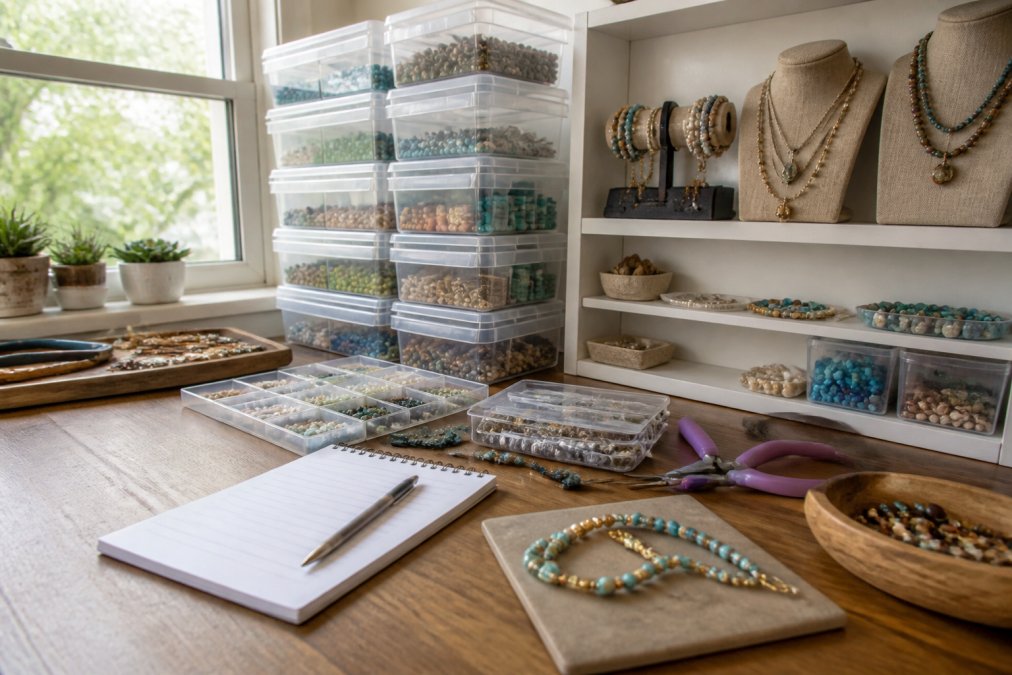
A dedicated workspace removes friction. If supplies are scattered across closets and your workspace is the kitchen table, you’ll abandon projects more easily. A room corner, organized shelf, or portable craft box creates a system where starting requires minimal setup.
Organize supplies by project or material type. Keep completed or in-progress projects visible; hiding them in drawers makes abandonment easy.
Resist Impulse Kit Purchases
This is the hardest habit but most important. Every new kit is a potential unfinished project. Before purchasing, ask: Do I have time to complete this before starting another? Am I buying because I genuinely want to make it, or because the finished product looks pretty?
Set a rule: one active project at a time until completion. Create a wish list of kits you want. Review it quarterly; if a kit has sat there six months without thought, it’s probably not worth buying.
Avoiding incomplete craft kits starts with honest evaluation before purchase and continues with realistic timelines and dedicated space after. The right kit, matched to your skill level and available time, with all supplies included and clear instructions, dramatically increases completion likelihood. Craft Living Artistry’s curated selection is built around this principle: every kit is genuinely completable and includes everything you need to succeed. Combined with the habits outlined here, unfinished projects become the exception rather than the rule.
Frequently Asked Questions
What should I check for in a craft kit before purchasing?
Before buying, verify the complete material list, check that all components match your skill level, and read recent customer reviews for reports of missing items. Look for detailed photos of kit contents, clear assembly instructions, and confirmation that the kit includes everything needed without requiring additional purchases. Contact the seller if the product description lacks detail about what’s included.
How can I verify the contents of a craft kit online?
Request or search for unboxing photos and detailed inventory lists from the seller. Read customer reviews specifically mentioning completeness and missing parts. Check if the product page includes a comprehensive material breakdown. For high-value kits, email the seller directly with questions about specific components. Look for seller ratings and return policies that protect you if items arrive missing or damaged.
What are the most common missing items in DIY craft kits?
Small embellishments like beads, clasps, or fasteners are frequently missing because they’re easy to overlook during packing. Adhesives, finishing materials, and specialized tools also commonly arrive incomplete. Instruction sheets or pattern guides sometimes go missing. Reading reviews from other buyers reveals which specific items tend to be absent in particular kits, helping you decide whether to purchase or request verification before ordering.
How do I handle a craft kit that arrives with missing pieces?
Document missing items with photos immediately and contact the seller within the return window. Most reputable sellers offer replacements or refunds. Keep your original packaging and receipt as proof of purchase. If the seller is unresponsive, file a dispute through your payment method or platform. For future purchases, choose sellers with clear return policies and strong customer service records to avoid this frustration.
This article was written using GrandRanker


0 Comments